

Executive Edge: The Practice of Strategic Choice
| Executive Edge: The New MBA Playbook in Practice Translating strategy into real-world results |
| Executive Edge is a new series authored by Dr. Bart Tkaczyk. Inspired by his latest book The New MBA Playbook: An Updated Skills Mix for the Future Business World (London & New York: Routledge), Executive Edge reveals the human and organizational dynamics that make or break strategy. Each column distills the latest management research into practical, next-day leadership moves. |

https://unsplash.com/photos/chess-pieces-on-board-nAjil1z3eLk
“Strategy requires hard choices.” — Michael Porter
You walk into a toy store with your 3-year-old daughter.
She scans the shelves… and suddenly says:
“Daddy, can we go to a toy store, please?”
There are toys everywhere.
But there is no LEGO.
At first glance, what does this reveal about how LEGO strategizes?
Why Strategy Is Not What You Think
In reality, most executives don’t struggle with ideas.
They struggle with clarity.
Across boardrooms and in my strategy advisory work with senior leaders across industries and geographies, I’ve seen strategy confused with:
- long-term plans,
- endless lists of initiatives,
- and fashionable buzzwords—often neatly packaged in polished PowerPoint decks.
But here’s the uncomfortable truth:
A plan alone is not a strategy. You cannot guarantee upfront that your strategy will work.
Strategy is not what you wish or hope.
It is what you choose—and what you are willing to forgo.
Because real choice requires sacrifice.
Strategy Is Not Operational Effectiveness
Crucially, doing things better is not the same as doing different things.
- Faster ≠ smarter
- Cheaper ≠ strategic
- Efficient ≠ distinctive
Operational effectiveness is about performing similar activities better than rivals—through efficiency, waste reduction (Lean), defect minimization (Six Sigma), or speed.
“Strategy is what you choose—and what you are willing to forgo.
But strategy?
Strategy is about uniqueness—delivering unique value. It means performing different activities —or performing similar activities in meaningfully different ways.
Operational excellence keeps you in the game. Strategy is what wins it.
The Strategy Shift: From Planning to Choosing
When done well, strategy is best understood as a pattern in a stream of decisions—not a static document—too often a dead one (can a PDF called “Strategy” execute anything on its own if your people can’t even articulate it?)—or simply a wish list…
A fundamental shift is underway:
| Old Logic | New Logic |
| Predicting and linear planning | Choice-making under uncertainty, (un)learning, and design |
| Top-down | Distributed |
| Precision | Rigor and imagination |
| Reactive, inactive, and ad hoc | Proactive, interactive, and integrated |
| Bureaucratic and mechanistic | Organic and super-flexible |
| Optimize for efficiency | Optimize for distinctiveness |
| Control | Discovery |
| Low trust/Passive | High trust/Co-active partnering |
| Compliance | Commitment |
| External controls | Self-control |
In turbulent environments, perfect foresight is impossible.
What matters instead is the quality of choices under uncertainty.
Strategy today is less about prediction—and more about:
- learning,
- iterating,
- and repositioning.
From Strategy as Analysis to Strategy as Design
Today, the most forward-thinking organizations no longer treat strategy as a purely analytical exercise.
They treat it as:
- a design challenge,
- a collaborative dialogue,
- a process of creative tension.
They:
- empathize,
- experiment,
- prototype,
- test and refine ideas,
- fail fast,
- learn constantly.
Strategy becomes less about control—and more about co-creation and discovery.
It is not built once.
It is continuously shaped.
Strategic Transformation: Reinvent or Be Replaced
In such environments, incremental change is not enough.
Organizations must embrace:
- entrepreneurial reconfiguration,
- M&A, strategic alliances, and partnerships,
- innovation ecosystems,
- external expertise and know-how,
- and bold repositioning.
Strategic transformation is not reactive.
It is proactive reinvention.
The real risk is not change.
The real risk is failing to renew.
Open Strategy: Strategy Is Everyone’s Job
Moreover, if strategy stays closed, reinvention never happens. At scale, it requires many voices —not just those at the top.
One of the most powerful shifts:
Strategy is no longer confined to the C-suite.
Leading enterprises:
- involve front-line employees,
- engage customers and suppliers,
- team up with entrepreneurs and experts,
- collaborate with partners—and sometimes even competitors,
- tap into crowds.
Why?
Because:
- insights are widely distributed,
- innovation is collective,
- execution requires ownership.
If strategy lives only at the top, it fails at the front line.
Stress-Testing Your Strategy
In practice, most strategies don’t fail because they are wrong.
They fail because they are untested, unchallenged, and untrue to reality.
Where are the weakest elements of your strategy? Here are seven key sets of tough questions that cut through the noise—use them to pressure-test your strategy. They can help you see where misalignment and wasted effort are concentrated.
Clarity & Choice
- If everything is a priority, what have we explicitly chosen not to do?
- Where are we spreading ourselves too thin—and why haven’t we stopped?
- If we had to cut 30% of our activities tomorrow, what would go first?
Strategic Ambition
- If we disappeared tomorrow, would anyone truly care? Why?
- Are we chasing growth—or building something that deserves to grow?
- What does “winning” with our customers really mean for us—and is it measurable? What critical performance variables are we tracking? And what would prove we’re actually losing?
Strategic Arena
- Where are we competing today that we shouldn’t be?
- Are we in markets because of opportunity—or because of habit?
- Which customers do we keep saying “yes” to that we should deliberately ignore?
Our Winning Moves
- Why do customers choose us when they have a real alternative—really?
- Are we trying to be both low-cost and differentiated—and failing at both?
- If our strategy succeeds, how will our competitors respond? What would they do next? If a serious competitor attacked us tomorrow, where are we most vulnerable? Where would we lose first?
Say–Do Gap
- What superpowers are we pretending to have?
- What can we do exceptionally well under pressure—not just in presentations—that others cannot easily replicate?
- Is there a gap between what we say and what we can actually deliver? Do we claim something externally that we can’t consistently deliver internally? If so, why does it persist?
Aligned Execution
- Do frontline employees or teams understand our strategy—and can they explain it in plain language—or do they just hear about it? Do their daily decisions reflect it?
- Are our incentives reinforcing our strategy—or quietly undermining it? Where are metrics or structures rewarding behavior that contradicts our strategy?
- Where does execution reliably break—and what have we normalized that should be unacceptable?
Future Readiness
- Are we renewing fast enough—or just getting better at yesterday’s game?
- What are we not seeing because we are too close to our current model? What assumptions about our business are we treating as facts—and when were they last challenged?
- If we were starting this company today, what would we refuse to build—and why are we still holding onto it?
Importantly, if these questions feel uncomfortable—good.
Strategy lives in discomfort.
Executive Edge Takeaways
In summary, what matters most:
- Strategizing is a continuous discipline.
- Great organizations start with people and purpose, not profit alone.
- Strategy is choice, not planning.
- If you can’t articulate your strategy, you can’t execute it, period.
- Trade-offs are non-negotiable. Winning firms make clear, bold trade-offs. If everything is a priority, nothing is.
- True advantage comes from uniqueness, not efficiency alone.
- Strategy must be dynamic, experimental, and inclusive.
- Strategy is a living system, not a fixed blueprint—or a dead document left to gather dust.
- Strategy is not a wish list.
- Ultimately, strategy is everyone’s job.
Final Thought
Strategy is often described as the “queen of the management sciences.”
But in truth, it is something far more human.
It is:
- imagination under constraint,
- discipline under uncertainty,
- courage under pressure.
And above all—
it is the art of choosing how to win.
Journal Entry for Executives
Pause. Step back from the noise. Reflect honestly—and resist the urge to answer too quickly. Then ask yourself:
Which strategic uncertainties keep you awake at night?
What is already working in your strategy—and worth doubling down on?
Where are you pretending to have a strategy—but actually just have a plan?
Where is your strategy unclear—and what is that costing you?
What part of your strategy would not survive honest scrutiny?
What hard choices are you avoiding right now?
Where are you hedging instead of committing?
What are you still holding onto—and funding—that no longer belongs in your strategy?
Do your top 50 leaders interpret your strategy the same way—or in 50 different ways?
What would a more courageous—and more focused, renewed—version of your strategy look like?
Tip: Use a dedicated journal. Revisit your entries over time to spot patterns—and how your thinking evolves.
Support Material
To go deeper and accelerate impact—for you and your team—explore these executive resources:
- The Full Playbook – Complete access to all 14 units of The New MBA Playbook: An Updated Skills Mix for the Future Business World. Get access here: www.routledge.com/The-NewMBA-Playbook-An-Updated-Skills-Mix-for-the-Future-Business-World/Tkaczyk/p/book/ 9781032805559
- Strategic Briefing Video – A concise, executive-friendly micro-learning on why today’s leaders need an updated skillset—and how to apply it immediately. Watch the video: https:// youtu.be/Xrq34Jj2NMQ?si=5h2ePCoy465uCcSl
- The Visual Toolkit (Sized for A1 printing) – A poster-sized framework for workplaces and team spaces to spark dialogue around future-ready leadership. Download the poster: https://s3eu-west-1.amazonaws.com/s3-euw1-ap-pe-ws4-cws-documents.ri-prod/9781003508274/ The%20New%20MBA%20Playbook_Poster_Sized%20for%20A1%20Printing.pdf
Executive Edge equips you with practical tools to lead smarter—not harder. In the next column, I’ll continue to build on The New MBA Playbook (Routledge) to help you stay ahead in the future of business.
This is the third installment in the Executive Edge series. (Read installment 1, installment 2.)
About the Author
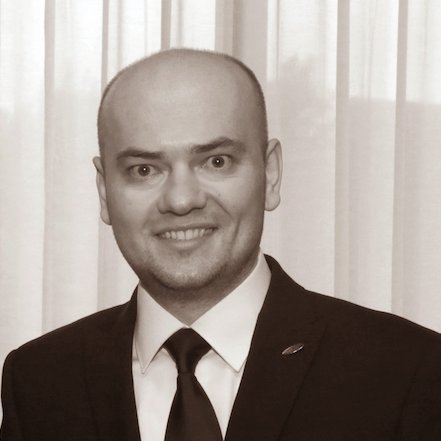
Bart Tkaczyk, Fulbright Scholar (University of California, Berkeley—the #1 public university in the U.S.), Course Leader (mbasprint.com), and Executive Member of the Academy of Management (AOM), is Managing Member of ENERGIZERS, LLC, a U.S. strategic transformation consulting firm, and currently serves on the Advisory Board of GENEXRA LLC, a U.S. future-systems venture spanning space governance, policy, diplomacy, AI, cybersecurity, quantum technologies, strategic foresight, enterprise renewal, executive crisis communication, design innovation, advanced service design, and human advancement. He partners with bold global leaders on strategy, executive leadership development, and large-scale change across sectors, blending academic rigor with practical insight. An award-winning HRD and organizational renewal advisor, behavioral economist and strategist, executive coach, MBA educator and case method instructor, and keynote speaker, he delivers impact where it matters most—boardrooms, executive classrooms, and transformation zones. His acclaimed Routledge books include Leading Positive Organizational Change: Energize – Redesign – Gel and The New MBA Playbook: An Updated Skills Mix for the Future Business World. He is now working on his third book, on Human Resource Development. On X: @DrBTkaczykMBA