Contact Us
[email protected]
Executive Edge: Behavioral Economics at Work in Executive Decision-Making
| Executive Edge: The New MBA Playbook in Practice Translating strategy into real-world results |
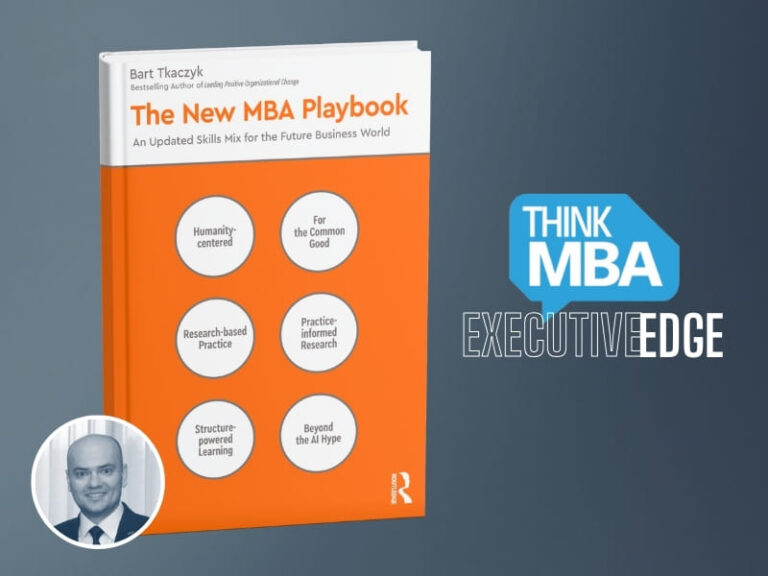
| Executive Edge is a new column authored by Bart Tkaczyk. Inspired by his latest book The New MBA Playbook: An Updated Skills Mix for the Future Business World (London & New York: Routledge), Executive Edge reveals the human and organizational dynamics that make or break strategy. Each column distills the latest management research into practical, next-day leadership moves. |

https://unsplash.com/photos/cupcake-top-with-cream-in-yellow-cupcake-holder-Ltv7a5m8i4c
“Economists think about what people ought to do. Psychologists watch what they actually do.” — Daniel Kahneman
- A team launches a new process with fanfare; six weeks later, almost no one uses it.
- You optimize pricing with data and modeling—then customers behave in ways the spreadsheet never predicted.
- New organizational values roll out with posters and workshops, yet everyday behavior barely shifts.
Sound familiar?
It’s the classic gap: rational strategy on paper, less rational behavior in practice.
The math is solid — but human behavior refuses to cooperate.
Executives pride themselves on rational decision-making. Strategies are modeled, budgets forecasted, risks meticulously assessed. Yet every leader knows that decisions—by customers, employees, even the board—rarely follow the tidy logic of a spreadsheet. Welcome to behavioral economics: the study of how real humans, not idealized “econs,” make choices.
This isn’t abstract theory. Behavioral economics offers executives a powerful lens to design better strategies, lead more effectively, and achieve results in the “last mile”—where real people make actual decisions. Leaders who ignore it risk strategic blind spots; leaders who embrace it gain a toolkit to nudge behavior, streamline execution, and energize performance.
From Econs to Humans
Traditional economics assumes people are rational, consistent, and purely self-interested. But real people—your customers, employees, and stakeholders—are none of these. They are humans: emotional, distracted, socially influenced, and prone to shortcuts.
Think about these everyday executive realities:
- Anchoring: The first number in a slide deck or negotiation frames every discussion that follows.
- Loss aversion: Customers push back harder on price increases than they respond to equivalent discounts.
- Status quo bias: Teams cling to outdated processes long after better options exist.
- Social proof: Sales jump when clients see peers adopting your product.
These aren’t quirks—they are predictable patterns. And executives who understand them can design interventions that work with human behavior, not against it.
Nudging: Small Changes, Big Impact
Richard Thaler and Cass Sunstein popularized the concept of the nudge: subtle adjustments in choice architecture that steer behavior without removing freedom of choice. For leaders, nudges are practical levers for last-mile challenges.
- Customer experience: Simplify subscription cancellations instead of hiding them. Transparency builds trust and long-term loyalty.
- Sales and pricing: Position the “medium” package as the reference point. Customers tend to avoid extremes and gravitate toward the middle option. (Think coffee.)
- Talent development: Rather than requiring everyone to complete a new training module, set it as the default in the quarterly development plan and allow opt-outs.
- Culture change: Share that “most managers in our firm are already following the new policy.” Social proof accelerates alignment and uptake.
Nudges are not manipulation. They are about designing environments where the easier, clearer, and more socially reinforced choice aligns with desired outcomes.
The A.S.S.E.T. Framework for Leaders
From my work with global executives—and in The New MBA Playbook—I developed the A.S.S.E.T. framework: a practical guide for applying behavioral insights with precision and impact.
- Attract Attention – People act on what captures their focus. Personalize communications, highlight what’s salient, and make the critical message stand out.
Example: Tax authorities increased compliance by bolding “Most people in your community have already paid.” - Streamline – Make the desired action frictionless. Simplify processes, reduce paperwork, or set beneficial defaults. Conversely, if you want to discourage behavior, add friction.
Example: Auto-enrollment boosts pension participation; requiring opt-in lowers it. - Socialize – Humans look to others for cues. Leverage networks, commitments, and norms.
Example: Promote sustainability initiatives by highlighting that “85% of employees already recycle at work.” - Energize – Spark action by adding fun, emotion, or incentives.
Example: A lottery among safe drivers proved more effective at reducing speeding than fines. - Timing Counts – Habits shift most during transitions. Target onboarding, life changes, or organizational inflection points.
Example: Employees are far more likely to increase savings when starting a new job than years later.
A.S.S.E.T. gives leaders a disciplined, ethical way to influence behavior—driving change that lasts.
Why This Matters for Executives
Behavioral economics is not just about clever nudges—it challenges leaders to rethink where they focus their attention.
Behavioral economics is not just about clever nudges—it challenges leaders to rethink where they focus their attention.
Most organizations invest heavily in the “first mile”: strategy design, product planning, policy development. Yet execution often breaks down in the “last mile”—the human moment when a customer decides whether to click “buy,” an employee chooses whether to adopt a new system, or a community follows through on a policy.
The last mile is human. Success depends less on incentives and mandates, and more on understanding cognitive biases, social norms, and decision contexts. Leaders who apply behavioral insights outperform not by working harder, but by designing smarter.
Applications Across the Executive Agenda
These insights translate directly into high-impact decisions across the executive agenda:
- People management: Reduce choice overload in employee benefits by curating default packages.
- Risk management: Use vivid, personalized stories—not abstract probabilities—to encourage compliance with safety protocols.
- Organizational change: Time major initiatives with natural disruptions—new fiscal years, reorganizations, office moves—when employees are most open to new habits.
These applications are not theoretical—they’re practical levers leaders can pull today to drive real results.
Ethical Leadership: Nudging for Good
Behavioral economics raises an important question: Where is the line between influence and manipulation?
Executives must commit to “nudging for good”—using behavioral insights transparently and in ways that enhance choice, not restrict it. The goal is to align human tendencies with outcomes that make people better off, as judged by themselves.
Done right, behavioral economics is not about tricking customers or employees. It’s about designing smarter defaults, clearer communications, and environments where people make better decisions with less effort.
Ethical nudging strengthens trust, accelerates adoption, and creates performance gains that last.
A Call to Action
The future of leadership isn’t just strategic—it’s behavioral. Executives who master behavioral economics will lead organizations that:
- Design cool products,
- Win customer trust,
- Strengthen employee engagement,
- Deliver policy compliance, and
- Drive sustainable growth.
Start small: redesign a form, adjust a default, A/B-test a behavioral cue. Apply the A.S.S.E.T. framework. Test, learn, adapt.
Behavioral economics is the new playbook for executives. Ignore it, and you risk wasted resources and failed initiatives. Embrace it, and you gain an advantage competitors will struggle to match.
Journal Entry for Executives
Take a few minutes to pause and reflect. As you consider your organization, ask yourself:
Where are we over-engineering strategy in the “first mile” and under-investing in the human “last mile” —where real decisions are actually made?
Tip: Use a dedicated journal for these reflections. Revisit your entries over time to notice recurring themes and how your thinking evolves.
Support Material
To go deeper and accelerate impact for you and your team, access these executive resources:
- The Full Playbook – Explore all 14 units of The New MBA Playbook: An Updated Skills Mix for the Future Business World. Access the book: www.routledge.com/The-New-MBA-Playbook-An-Updated-Skills-Mix-for-the-Future-Business-World/Tkaczyk/p/book/9781032805559
- Strategic Briefing Video – A concise, executive-friendly micro-learning video outlining why today’s leaders need an updated skillset—and how to apply it immediately. Watch the video: https://youtu.be/Xrq34Jj2NMQ?si=5h2ePCoy465uCcSl
- The Visual Toolkit (Sized for A1 printing) – A poster-sized framework for workplaces and team spaces to spark dialogue around future-ready leadership. Download the poster: https://s3-eu-west-1.amazonaws.com/s3-euw1-ap-pe-ws4-cws-documents.ri-prod/9781003508274/The%20New%20MBA%20Playbook_Poster_Sized%20for%20A1%20Printing.pdf
Executive Edge equips you with practical tools to lead smarter—not harder. In the next column, I’ll explore Leadership, continuing to build on The New MBA Playbook (Routledge) to help you stay ahead in the future of business.
This is the first installment in the Executive Edge series. (Read installment 2.)
About the Author
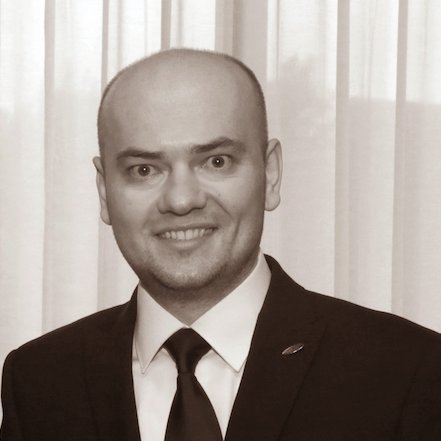
Bart Tkaczyk, Fulbright Scholar (University of California, Berkeley—the #1 public university in the U.S.), Course Leader (mbasprint.com), and Executive Member of the Academy of Management (AOM), is Managing Member of ENERGIZERS, LLC, a U.S. strategic transformation consulting firm, and currently serves on the Advisory Board of GENEXRA LLC, a U.S. future-systems venture spanning space governance, policy, diplomacy, AI, cybersecurity, quantum technologies, strategic foresight, enterprise renewal, executive crisis communication, design innovation, advanced service design, and human advancement. He advises bold global leaders on strategy, executive leadership development, and large-scale change across sectors, blending academic rigor with practical insight. An award-winning consultant, behavioral economist and strategist, executive coach, case method instructor, and keynote speaker, he delivers impact where it matters most—boardrooms, executive classrooms, and transformation zones. His acclaimed Routledge books include Leading Positive Organizational Change: Energize – Redesign – Gel and The New MBA Playbook: An Updated Skills Mix for the Future Business World. He is now working on his third book, on Human Resource Development. On X: @DrBTkaczykMBA