Contact Us
[email protected]

What an MBA Teaches that AI Never Will in 2026
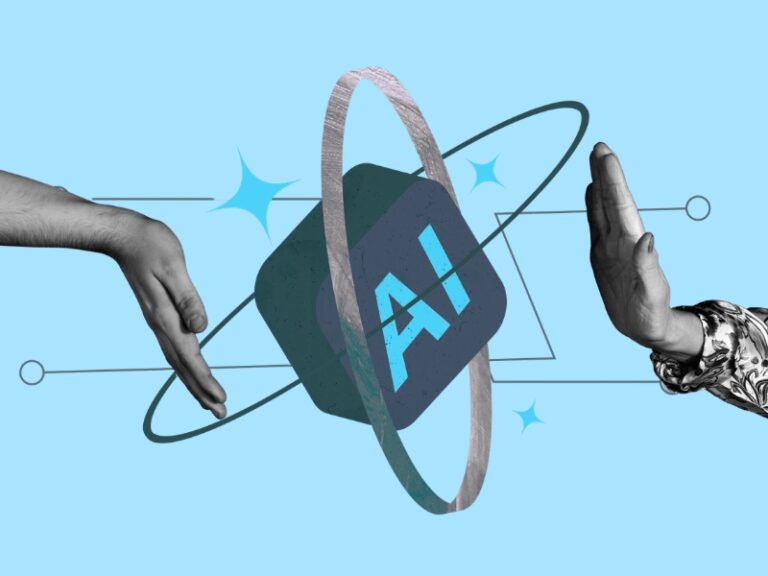
AI is changing organisations across different economies, and MBAs are no exception. Here’s why an MBA still provides value and ROI – and who should reconsider an MBA in the age of intelligent machines.
In 2026, you can walk into just about any business school admissions event, and you’ll hear the same anxious question: “With AI automating so much of business, is an MBA still worth it?” It’s a fair concern, as AI now drafts financial models, generates market research, and even simulates customer conversations.
This question seems to assume that the primary value of an MBA lies in technical or analytical output. The deeper issue is not what AI can do, but what remains distinctly human inside modern organisations. While intelligent systems take over more structured tasks, the comparative advantage of human professionals shifts toward the capabilities machines struggle to replicate.
Emotional Intelligence: Why Soft Skills Matter in the Age of AI
Perhaps nowhere is the gap between AI and human capability more pronounced than in emotional intelligence. While AI can now simulate empathetic responses and even monitor team sentiment in workplace communications, it remains fundamentally incapable of genuine human connection or actual empathy.
A 2025 Workday study revealed a disconnect: 82% of individual contributors believe employees will increasingly crave human connection as AI becomes more integrated into work, but only 65% of managers share that view. This gap suggests many leaders may be underestimating the emotional and relational impact of AI on their teams.
MBA programs develop leadership, emotional intelligence, and interpersonal skills through intensive group work, leadership simulations, and real-world consulting projects where students must navigate team dynamics, resolve conflicts, and motivate diverse groups toward common goals.
While the exercise took place a few years ago, critical, creative, and strategic thinking remain domains where human training and experience still seem to outperform current AI systems.
Consider the reality of leading through organizational change: a merger, restructuring, or strategic pivot. AI can model the financial implications and even predict employee attrition risks. But when it’s time to stand in front of anxious employees and communicate a difficult decision while maintaining trust, purpose, and morale? That requires emotional intelligence that no algorithm can provide.
As one Fast Company analysis put it: AI can handle the “what” and “how” of work, but only real leaders can handle the “why” Fast Company. In the age of AI, softer skills might matter more than ever.
AI Falls Short with Strategic Thinking
Beyond emotional intelligence, MBA programmes are designed to cultivate strategic judgment in complex, real-world situations, an area where AI still shows clear limitations. In a strategy exercise reported in September 2024 and attributed to the WU Executive Academy, 21 MBA students were asked to tackle an entrepreneurial challenge alongside ChatGPT.
The task centred on a small company with a strong innovation but no effective means of protecting it from larger competitors. Participants were required to develop viable strategic responses under real-world constraints. While the MBA students submitted their solutions once, ChatGPT was reportedly given multiple attempts to refine its answers.
According to the evaluation described in the article, the outcome was unambiguous. All 21 MBA students outperformed ChatGPT across every assessment criterion used. The students’ strategies were judged to be more situation-specific, more realistic, and better grounded in practical business judgment. In contrast, ChatGPT’s responses tended to remain generic, lacking the contextual sensitivity required to address the company’s strategic dilemma effectively.
While the exercise took place a few years ago, critical, creative, and strategic thinking remain domains where human training and experience still seem to outperform current AI systems.
On top of that, an MBA still carries a brand value that AI is unlikely to replace any time soon. The degree continues to act as a widely recognised proxy for leadership potential, analytical discipline, and professional networks.
Who Benefits From an MBA in the Age of AI
While an MBA is the elite diploma when it comes to strategy, leadership, organisational skills and emotional intelligence in a business context, an MBA is not universally valuable or profitable in an AI-driven economy.
An MBA can often be a weak investment for individuals seeking:
- Pure technical execution roles
- Narrow functional specialisation
- For professionals who need rapid credentialing for short-term employability
An MBA does remain a strong investment for individuals aiming to:
- Lead complex organisations
- Make high-stakes decisions under uncertainty
- Integrate technology, people, purpose, and strategy
- Assume responsibility for outcomes rather than outputs
AI reduces the scarcity of information and execution capacity. It increases the need for human judgment, strategy and emotional leadership. The MBA’s relevance in 2026 lies entirely in serving the latter.
Does AI Render Technical MBAs Unnecessary?
If you’re in a technical field, considering an MBA, the question of whether an MBA is worth it, can seem even more pressing. If AI can write code and analyze data faster than humans, why invest six figures in a technical business education?
The concerns are obviously not unfounded. Entry-level hiring at the 15 biggest tech firms fell 25 percent from 2023 to 2024, also targeting the roles relevant to many technical MBA graduates. AI’s progression is such that after every seven months or so, it is able to complete tasks that took twice as long before. On a coding project, AI can do in minutes what used to take an hour.
A technical MBA doesn’t primarily train graduates to write better code – AI already does that better and definitely faster. Instead, these programs develop the ability to bridge technological capability and business value. A technical MBA is still valuable if your goal is not to compete with AI on execution, but to operate with it and above it. In an AI-intensive economy, advantage shifts from doing the work to deciding, directing, and integrating the work. And that is the layer where good technical MBAs operate.
Microcredentials and Continuous Upskilling
People looking for short-term employability might be better off upskilling with microcredentials. Certificates in STEM fields like business analytics, data, and AI are a growing trend within business education. This happens as the internet and online teaching is complementing classic degree structures with more flexible, modular, and personalized learning paths, at a fraction of the (time and opportunity) cost.
Microcredentials aren’t peripheral offerings. According to Coursera’s 2025 Micro-Credentials Impact Report, 96% of employers agree that microcredentials strengthen a candidate’s job application, while 94% of students say microcredentials fast-track skill development. Perhaps most tellingly, 87% of employers have hired at least one candidate with a micro-credential in the past year.
What makes microcredentials so attractive is their alignment with the velocity of technological change. They allow professionals to update specific competencies without committing to multi-year programmes, making them particularly suited for rapidly evolving domains such as AI tooling, data infrastructure, automation workflows, and applied analytics.
However, microcredentials primarily address what you know and what you can do. They are less effective at developing how you think, how you decide, and how you lead. This distinction is critical when comparing them to MBA education.
At the same time, MBAs have an answer to that. MBA programmes are inherently designed around continuous adaptation – decision-making models, strategic reasoning, and leadership capacity remain relevant even as technologies change. At the same time, an increasing number of MBAs are offering continuous upskilling, rather than “only” a one-time diploma.
Is an MBA Worth It in the Age of AI?
Whether an MBA is worth it in 2026, in an increasingly AI-driven economy, will always be case dependent.
AI is steadily eroding the premium once attached to routine analytical work and certain forms of technical execution. Tasks that previously required specialised training or significant time investment are becoming faster, cheaper, and increasingly automated. As a result, labour market dynamics are shifting, redistributing where human contribution creates the most value.
In this environment, the practical justification for an MBA changes. Its significance lies not in safeguarding against automation, but in cultivating capabilities that gain importance as intelligent systems become synthetic colleagues. Structured decision-making, economic reasoning, organisational navigation, and leadership under uncertainty remain fundamentally human responsibilities.