Contact Us
[email protected]

An MBA at SDA Bocconi: Stepping Back to Strengthen the Fundamentals – Diego Villena
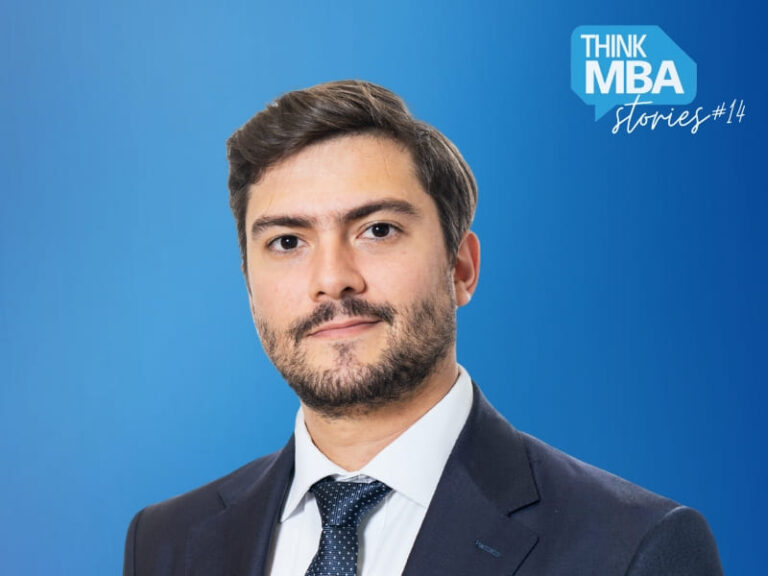
Editor’s Note: In this edition of ThinkMBA Real Stories, we feature Diego Villena, an MBA candidate at SDA Bocconi, whose professional journey spans commercial strategy, market research, and customer-focused growth. In this reflective Q&A, Diego shares why he chose to return to study, how the MBA is helping him strengthen strategic fundamentals, and how the experience is reshaping his approach to decision-making, leadership, and long-term impact in business.
Diego Villena is currently pursuing an MBA at SDA Bocconi, with a focus on strategic marketing and business planning.
After a few years working, Diego decided to go back to studying because he realised that he was learning only within the same patterns and routines — he wanted to take a step back, strengthen the fundamentals, and develop a more deliberate way of thinking and making decisions.
Diego recently completed a marketing internship at Eli Lilly, where contributions included analysing the Italian Type 2 diabetes market and designing engagement strategies for General Practitioners — he collaborated with cross-functional teams to align recommendations with patient-centred goals.
At Tridge, Diego contributed to market penetration strategies across multiple countries and managed key client engagements, leveraging market research and contract negotiation expertise — he collaborated with teams to expand the financial institutions market and supervised team members for targeted lead generation.
Diego is passionate about combining data-driven insights with collaborative approaches to achieve impactful outcomes that align with organizational objectives, while fostering diverse perspectives in dynamic environments.
“On the professional side, the school’s academic reputation and the quality of the faculty really stood out. I liked that it’s rigorous, but still closely connected to how business works in practice.“
Why an MBA at SDA Bocconi, with a focus on Customer Experience Management?
Before deciding on the MBA at SDA Bocconi, Diego spoke with a few alumni, and what helped him the most on his decision was how concrete they were about the experience — they talked about the pace, the expectations, and how much you’re challenged in class and in teams to be sharper and more structured in the way you approach problems.
“I chose SDA Bocconi because it felt like the right next step for me, both professionally and personally,” Diego says. “On the professional side, the school’s academic reputation and the quality of the faculty really stood out. I liked that it’s rigorous, but still closely connected to how business works in practice.”
Another factor, compared to some other programs, is that the cohort is relatively small — it makes the experience more personal, and it allows you to truly connect with people rather than just meet them.
“Personally, I have Italian heritage and family in Italy, so studying in Milan also felt like a chance to reconnect with that part of my life while moving my career forward,” Diego admits.
And the Customer Experience Management focus was the final piece. “I want to keep working in customer-facing, growth-oriented roles, but with a more strategic lens,” he says. “CEM felt like the right bridge because it links customer needs to business strategy and cross-functional execution, which is exactly the perspective I wanted to build.”
What makes you go back to studying for an MBA?
It is very common that professionals who have been working for a few years end up in a loop and feel that they are not learning anything new besides the processes of their daily jobs.
“I went back to studying because after a few years of working, I felt I was learning a lot, but mostly within the same patterns and routines,” Diego recalls. “I wanted to take a step back, strengthen the fundamentals, and develop a more deliberate way of thinking and making decisions.”
Also, in today’s world, information is easy to access, and what is harder, and what really matters, is learning how to ask the right questions — “that is where the MBA has been valuable for me,” he admits.
Diego admits that the classroom discussions and the diversity of the cohort constantly challenged his assumptions. “You can look at the same problem with people who come from completely different industries, cultures, and functions, and you realize there is never just one ‘right’ answer,” that process has helped me think more strategically, communicate more clearly, and connect customer and growth topics with the broader business context.”
For him, the SDA Bocconi is adding the value he was looking for because it is not only giving him knowledge, but it is also reshaping how he approaches problems and decisions.
How has Bocconi added a stronger foundation in strategy and helped complement your sales experience with other areas?
As Diego’s background is entirely commercial, he tends to approach challenges from the outside in, beginning with customer needs and growth opportunities. “The MBA has helped me connect that view to the internal reality of the business, with stronger strategy fundamentals and more cross-functional understanding,” he says.
“I wanted to take a step back, strengthen the fundamentals, and develop a more deliberate way of thinking and making decisions.”
“One word that really stayed with me is consistency — strategy only works if what you choose to do is consistent with your positioning, your priorities, and the way the organization actually operates day to day,” he reflects. “The courses helped me think beyond individual initiatives and focus more on alignment, trade-offs, and staying coherent over time.”
He adds: “Finance has also been very valuable because it pushes you to translate ideas into value creation — it changes the questions you ask, from ‘will this grow revenue?’ to ‘what does it mean for profitability, risk, and resource allocation?’”
“And with operations and supply chain, the mindset shift has been toward scalability and delivery,” he admits. It’s a reminder that customer experience is not only what you promise, but it’s what you can deliver consistently through processes and execution — that cross-functional perspective has helped me become more rounded and better prepared for broader leadership roles,” he says.
Do you expect an ROI from your investment?
Diego says that he expects an ROI but in a broader way than only a short-term number — as something that compounds over time through better judgment, stronger leadership, and better opportunities.
He says, “There is the obvious side, which is career progression. I expect the MBA to help me access roles with broader responsibility and accelerate my growth into positions where I can have more impact.”
“But the bigger ROI for me is in the long term. It is the way the program strengthens how I think and decide — I am building a toolkit that will keep paying off, whether I am evaluating opportunities, leading teams, or navigating change — And the network is also part of that return, because those relationships continue to create value well beyond the program,” he notes.
What are the main subjects of study that you feel will help your future career growth?
For Diego, the most valuable subjects are the ones that strengthen both strategic thinking and execution across functions.
- Strategy, because it helps make clearer choices and understand what really drives competitive advantage.
- Customer Experience and Marketing, since Diego wants to keep working in roles that sit close to the customer and growth, and he is interested in how to translate customer insight into real journeys and measurable value.
- Finance and Operations because they make plans more grounded. It helps understand constraints, trade-offs, and what it takes to scale sustainably.
- Organizational Behaviour is one of Diego’s favourites courses because it focuses on the human side of business. “How you lead, how you influence without authority, and how you drive change from within an organization,” he says. “It reminded me that in the end, transformation is never only about processes or strategy, it is about people, and your ability to bring them with you.”
What are the most valuable outcomes of studying at SDA Bocconi, and what is there to improve?
- The biggest value for Diego has been the shift in how to approach problems. “In today’s world, you can access information easily, but what really makes a difference is learning how to ask better questions, challenge assumptions, and be more deliberate before jumping into solutions,” he says.
- A second outcome for him has to do with the people. “The diversity of the class really changes the experience. You can discuss the same case with classmates from different industries and cultures and end up with completely different interpretations of what the real problem is and what the best path forward looks like — that has been one of the most meaningful parts of the MBA for me.”
- In terms of improvement, Diego admits that SDA Bocconi has an outstanding reputation and network within Italy, and that is a huge advantage to build a career in the country — “For someone like me who plans to return to my home country, the network can feel more limited depending on the geography or industry. At the same time, I can see the school is investing in building more partnerships and strengthening its international reach, which I think is moving in the right direction,” he notes.
Is the student network an asset that will help you in the future? How does becoming a Class fellow and an SDA Bocconi Ambassador help?
Diego admits that he perceives the student network as an asset for the future, and admits that what makes it different is how it forms. “You go through a very intense period together, and there is also a lot of uncertainty along the way, especially around recruiting and big career decisions. That shared experience creates a level of closeness and trust that is hard to replicate elsewhere,” he says.
“Even before I started, when I spoke with alumni, one of them told me he wanted to help because someone had supported him in the same way when he was applying. It was very much that pay-it-forward mentality, and it made the network feel real to me, not just something people talk about,” Diego explains.
Becoming a Class Fellow and an SDA Bocconi Ambassador helped him lean into that alumni culture. “It gave me a way to contribute, support others, and represent the program, while also strengthening my own leadership and communication skills. For me, it turns the network into something active, built through relationships and contribution, not just contacts,” he says.
“The MBA has helped me connect the customer-focused view to the internal reality of the business, with stronger strategy fundamentals and more cross-functional understanding.”
How does Bocconi’s motto, ‘Research, rethink, reimagine,’ inspire you and your colleagues?
For Diego, the motto describes a mindset that the MBA keeps reinforcing:
- Research is about starting from evidence, not assumptions. It is being disciplined about understanding what is really happening before you form an opinion.
- Rethinking is the part that he finds most challenging and most valuable. It is the habit of questioning your first answer and being willing to change your mind when someone brings a stronger argument or a different perspective.
- Reimagine is what happens after that. It is taking what you learned and using it to design a better approach, whether that is a strategy, a process, or a customer experience.
He also thinks the motto shows up in the culture of the class. “In discussions, you rarely leave with a single ‘correct’ answer,” he says. “You leave with a clearer understanding of the trade-offs and with new ways of seeing the same problem, which is what makes the learning stick.”
What challenges have you experienced so far from returning to study and living in another country?
- For Diego, the biggest challenge has been adjusting to the intensity and the pace. “One thing the Program Director said on the first day really stayed with me. The program is designed to offer you more than you can fully digest. That is absolutely true, and you feel it very quickly.”
- He says that it forces you to learn how to manage your time and energy, and to prioritize. “You realize that everything is a trade-off; you cannot do everything at the same level all the time, so you have to make intentional choices about what matters most, academically, professionally, and personally,” he explains.
- Another challenge has been getting comfortable with the constant collaboration. “There is a lot of group work, different working styles, and high expectations, so you learn quickly how to communicate clearly, align on standards, and move forward even when you do not all see things the same way,” Diego says.
- And living in another country adds another layer. “Even when you feel connected to the culture, you still adapt to new routines, new systems, and being away from familiar support structures. At the same time, those challenges are part of the experience, and they have helped me become more resilient and adaptable.”
What three pieces of advice would you share with newcomers at your MBA at SDA Bocconi?
Diego shares his three recommendations to newcomers:
1. Don’t try to optimize everything at the same time.
Some weeks school takes priority, other weeks recruiting does, and sometimes you just need to recover. The key is making trade-offs on purpose instead of trying to be great at everything all the time.
2. Learn to ask for help early.
Everyone is managing a lot, and the fastest way to get stuck is trying to do everything alone. Use classmates, alumni, and the career team sooner than you think you need to.
3. Treat the network like real relationships, not networking.
Be present in group work, follow through, and help when you can. Trust is built in everyday moments, and that’s what turns classmates into long-term connections.
“In today’s world, information is easy to access, and what is harder, and what really matters, is learning how to ask the right questions — “that is where the MBA has been valuable for me.”