
Executive Edge: What Makes Strategy Take Off
| Executive Edge: The New MBA Playbook in Practice Translating strategy into real-world results |
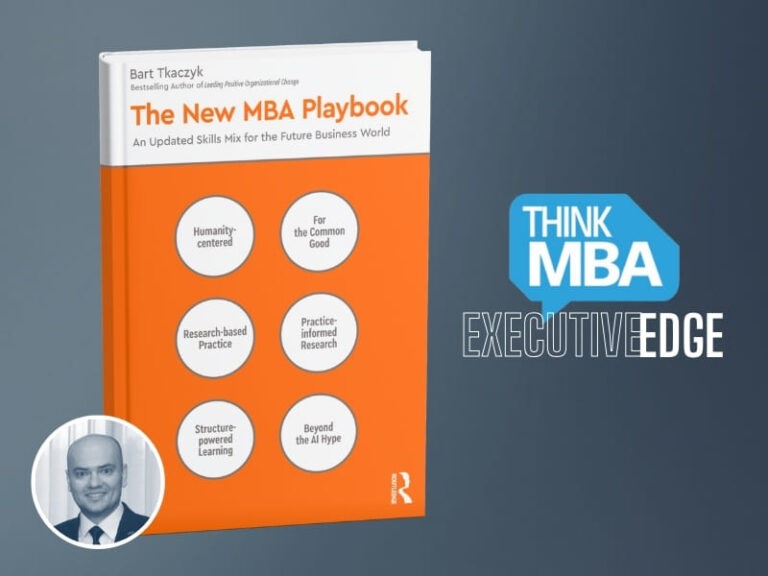
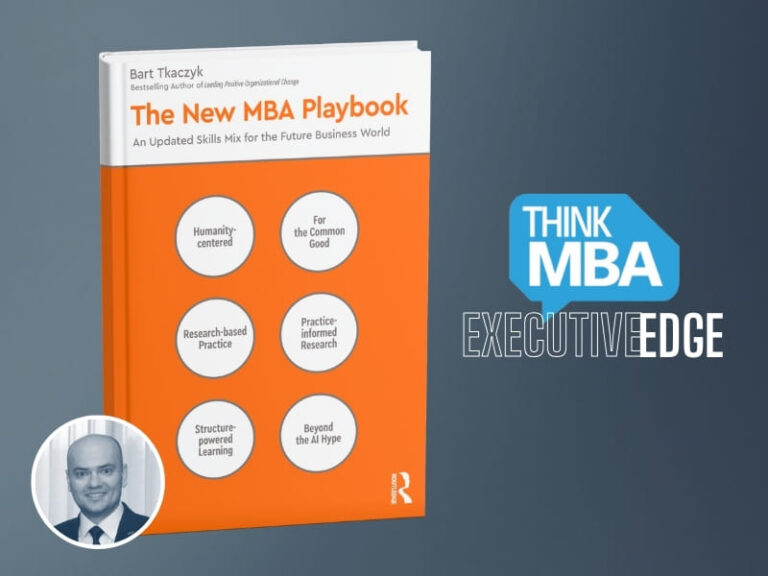
| Executive Edge is a new series authored by Dr. Bart Tkaczyk. Inspired by his latest book The New MBA Playbook: An Updated Skills Mix for the Future Business World (London & New York: Routledge), Executive Edge reveals the human and organizational dynamics that make or break strategy. Each column distills the latest management research into practical, next-day leadership moves. |

“If you want something new, you have to stop doing something old.” — Peter Drucker
Last time, in Executive Edge #3: The Practice of Strategic Choice, I emphasized that strategy is ultimately about making hard choices. Every strategy worth executing begins with seven tough questions:
- Strategic Clarity (Choice & Trade-offs): What hard trade-off have we deliberately made—and what have we deliberately chosen not to do?
- Strategic Ambition (Purpose & Winning): Are we building an enterprise that deserves to win with our customers—or simply chasing growth?
- Strategic Arena (Battlegrounds): Where are we competing by choice—and where are we competing by habit?
- Our Winning Moves (Our Edge): What is our real edge—and if a serious competitor attacked tomorrow, where would it crack first?
- Strategic Credibility (Promise vs. Performance): Where are we overpromising and underdelivering—to customers, employees, or other stakeholders?
- Aligned Execution (From Strategy to Action): Where does our strategy break down between intent and execution—and what have we normalized that should be unacceptable?
- Future Readiness (Strategic Renewal): If we were launching today, what wouldn’t we build—and why are we still investing in it instead of renewing our business for tomorrow?
Those seven questions should sit at the heart of Strategy 101. They’re some of the questions I work through with CEOs and senior executive teams across industries and around the world. They’re also a theme I explore in my next book on strategic Human Resource Development.
But here’s the uncomfortable truth.
Most strategies don’t fail on paper.
They fail because organizations never truly commit to the choices they have made.
Walk into almost any company six months after the annual strategy retreat.
The slide decks are polished.
The strategy document is beautifully designed.
The town halls are over.
And everyone has quietly gone back to business as usual.
The strategy wasn’t the problem.
The conversation was.
Or, more precisely, the lack of engagement.
A strategy locked inside the executive suite is little more than an expensive document. It doesn’t create competitive advantage.
People do.
Unless people understand the strategy, believe in it, and see themselves in it, execution stalls long before results appear.
If your ambition is to become as good as the best, you’ve already accepted second place—and that someone else defines excellence.
This is where many organizations get stuck. They spend enormous amounts of time “planning”—or producing ever-growing strategic wish lists that resemble laundry lists—but remarkably little time helping people understand why those choices matter and how to act on them together.
Strategy succeeds only when it becomes a shared way of thinking.
A plan sitting on a shelf is not a strategy.
Strategy is a set of choices people embrace and execute—and that customers ultimately buy into and reward.
The Strategy Meeting Everyone Dreads
We’ve all been there.
A room full of very important people.
Coffee cups. Laptops open. Another SWOT analysis projected onto the screen.
Certain leadership teams still approach “strategic planning” exactly as they did decades ago. Predictably, they identify strengths and weaknesses, assess opportunities and threats, and then set out to fix what’s broken.
By lunchtime, everyone leaves drained.
Ironically, the very process intended to energize the organization has done exactly the opposite.
Don’t misunderstand me. Understanding competitive threats, organizational weaknesses, and changing market dynamics is essential.
But SWOT—a framework developed for a very different business world more than half a century ago—is a poor foundation for strategy today.
By its nature, it directs attention toward diagnosis rather than design—and toward problems rather than possibilities. Before long, strategy becomes an exercise in damage control rather than value creation.
Too many organizations stop there.
Instead of moving from analysis to strategic imagination, the conversation becomes dominated by deficits. Leaders devote so much energy to correcting deficiencies that they rarely imagine what could become extraordinary.
Ideally, strategy begins where SWOT ends.
What If We’re Asking the Wrong Questions?
Traditional strategy starts with problems.
SOAR (strengths, opportunities, aspirations, results), a strengths-based strategic framework developed by Jacqueline M. Stavros and colleagues, leverages strengths (the positive core) to unlock potential.
Rather than asking:
- “What’s broken?”
- “How do we survive it?”
- “Where are we falling behind?”
- “How do we catch up?”
SOAR asks:
- “What are we already world-class at?”
- “What profitable opportunities are emerging?”
- “What future are we trying to create?”
- “What results would truly redefine success?”
Those are different conversations.
The shift is subtle—but profound.
This isn’t naïve positivity.
It’s strategic thinking.
There’s an important distinction.
A positive strategy doesn’t ignore problems. It simply refuses to let problems define the future.
Organizations that consistently outperform their competitors don’t succeed because they worry more about their weaknesses.
They succeed because they discover what makes them distinctive—and capitalize on it.
SOAR reframes the conversation from fixing yesterday to creating tomorrow.
That reorientation matters.
Because strategy isn’t merely an analytical exercise.
It’s an act of imagination—and innovation.
Stop Fixing Average
Executives dedicate extraordinary amounts of time to making average performance slightly less average.
Meanwhile, their greatest strengths receive surprisingly little attention.
That’s backwards.
Competitive advantage has never come from becoming marginally better at your weaknesses.
It comes from becoming exceptional at your strengths.
The evidence is all around us.
Apple doesn’t become Apple by fixing everything that isn’t working. It obsesses over elegant design, exceptional user experiences, a tightly integrated ecosystem, and technology that empowers people.
SpaceX doesn’t build its reputation by dwelling on its weaknesses. It focuses relentlessly on engineering breakthroughs that transform the economics of spaceflight in pursuit of making life multiplanetary.
LEGO doesn’t reinvent itself by trying to reverse declining sales. It invests disproportionately in imagination, creativity, learning through play, and uncompromising quality—the strengths that make the brand iconic—then extends them into new products, partnerships, experiences, and digital platforms.
John Deere, a 189-year-old company, isn’t defined by tractors. Instead, it reimagines itself as a precision agriculture and technology company, combining AI, autonomous equipment, sensors, and data analytics to help farmers produce more with fewer resources. It honors its heritage while advancing purpose-driven innovation to help feed a growing world—proof that iconic organizations stay relevant by creating what’s next, not protecting what came before.
Great companies become great because they double down on what makes them impossible to ignore.
Importantly, the same principle applies to individuals.
High-performing leaders know their weaknesses—but they build their careers around their strengths.
Winning organizations should do the same.
The Missing Ingredient: Strategic Energy
Here’s something strategy books rarely discuss: energy.
Every strategy either creates energy—or destroys it.
Energy is what transforms strategy from compliance into commitment. The best strategies give people a future they want to build. The worst feel like another compliance exercise.
That’s why SOAR shifts the conversation from weaknesses to energizing aspirations.
An aspiration isn’t another corporate slogan. It’s a destination worth pursuing. It answers questions no spreadsheet can:
- “Why are we doing this?”
- “What kind of enterprise do we aspire to become?”
- “What positive impact do we want to have?”
This isn’t wishful thinking or fantasy. It’s disciplined optimism grounded in execution. Optimism without execution creates little value.
People don’t rally around KPIs alone. They rally around purpose.
When employees can picture a compelling future, they contribute more ideas, collaborate more willingly, and become far more resilient when inevitable setbacks occur.
The best strategy doesn’t simply inform people.
It energizes them.
From Strategy to Movement
The most successful CEOs don’t simply communicate strategy.
They create movement.
Movement begins with conversation.
It grows through involvement.
With questions such as:
- “What strengths should we build on together?”
- “What possibilities are we not seeing yet?”
- “What shared future unites us?”
Those questions accomplish something many traditional “strategic planning” sessions never do.
They invite ownership.
People support what they help create.
That may be one of the most underappreciated truths of strategy execution.
When employees participate in shaping the future—through business strategy development, communication, and execution—they become emotionally invested in making it happen.
The smartest strategy rarely comes from the smartest person.
It comes from the smartest conversation.
The Benchmarking Trap
Executives love benchmarking. Most companies benchmark themselves into mediocrity.
Who has lower costs?
Higher margins?
Better customer satisfaction scores?
Benchmarking has its place.
But it also has a hidden cost.
If your ambition is to become as good as the best, you’ve already accepted second place—and that someone else defines excellence.
Winning organizations don’t chase best practices.
They create next practices.
Benchmarking explains today’s game.
Strategy changes tomorrow’s.
Benchmarking asks, “How can we become more like them?“
Strategy asks, “How can we become unlike anyone else?“
SOAR begins with a different conversation.
Instead of asking,
“How do we do what everyone else is doing—only better?“
it poses a far more powerful question:
“What new value can we create that makes the competition less relevant?“
Stop trying to catch up.
Start redefining the game.
Because strategy isn’t about keeping pace.
It’s about setting the pace.
The Executive Challenge
In the previous Executive Edge, I underscored that strategy is about choice—and that real choice requires sacrifice. Too many leaders avoid both. Yet that’s precisely where competitive advantage is won or lost.
But making strategic choices is only half the battle.
The real challenge is leading the conversations that transform strategic choices into shared ownership, commitment, and action.
Can you create a strategy people genuinely want to execute?
The future doesn’t belong to organizations with the slickest slide decks.
It belongs to organizations whose people believe they are building something extraordinary.
That’s the real promise of SOAR.
Not another framework.
A better conversation.
Because ultimately, the quality of your strategy will never exceed the quality of your strategic conversations.
After all, strategies don’t execute themselves.
Strategic dialogue does.
Journal Entry for Executives
Strategy doesn’t spread through presentations. It spreads through conversations.
Take this question into your next executive offsite.
This time, don’t begin with the usual discussion of weaknesses, threats, and gaps.
Start somewhere different.
Ask your leadership team:
What is uniquely great about us that the world needs more of?
Tip: You may discover that the most powerful strategy isn’t hiding in your weaknesses. Perhaps it’s already sitting in your strengths—waiting for the right conversation to let it soar.
That’s when your strategy takes off.
Support Material
To go deeper and accelerate impact—for you and your team—explore these executive resources:
- The Full Playbook – Complete access to all 14 units of The New MBA Playbook: An Updated Skills Mix for the Future Business World. Get access here: www.routledge.com/The-New-MBA-Playbook-An-Updated-Skills-Mix-for-the-Future-Business-World/Tkaczyk/p/book/9781032805559
- Strategic Briefing Video – A concise, executive-friendly micro-learning on why today’s leaders need an updated skillset—and how to apply it immediately. Watch the video: https://youtu.be/Xrq34Jj2NMQ?si=5h2ePCoy465uCcSl
- The Visual Toolkit (Sized for A1 printing) – A poster-sized framework for workplaces and team spaces to spark dialogue around future-ready leadership. Download the poster: https://s3-eu-west-1.amazonaws.com/s3-euw1-ap-pe-ws4-cws-documents.ri-prod/9781003508274/The%20New%20MBA%20Playbook_Poster_Sized%20for%20A1%20Printing.pdf
Executive Edge equips you with practical tools to lead smarter—not harder. In the next column, I’ll explore Organization Development and Change, building on the ideas in The New MBA Playbook (Routledge) to help you navigate the future of business.
This is the fourth installment in the Executive Edge series. (Read installment 1, installment 2, installment 3.)
About the Author
Bart Tkaczyk, Fulbright Scholar (University of California, Berkeley—the #1 public university in the U.S.), Course Leader (mbasprint.com), and Executive Member of the Academy of Management (AOM), is Managing Member of ENERGIZERS, LLC, a U.S. strategic transformation consulting firm, and currently serves on the Advisory Board of GENEXRA LLC, a U.S. future-systems venture spanning space governance, policy, diplomacy, AI, cybersecurity, quantum technologies, strategic foresight, enterprise renewal, executive crisis communication, design innovation, advanced service design, and human advancement. He partners with bold global leaders on strategy, executive leadership development, and large-scale change across sectors, blending academic rigor with practical insight. An award-winning HRD and organizational renewal advisor, behavioral economist and strategist, executive coach, MBA educator and case method instructor, and keynote speaker, he delivers impact where it matters most—boardrooms, executive classrooms, and transformation zones. His acclaimed Routledge books include Leading Positive Organizational Change: Energize – Redesign – Gel and The New MBA Playbook: An Updated Skills Mix for the Future Business World. He is now working on his third book, on Human Resource Development. On X: @DrBTkaczykMBA