Contact Us
[email protected]

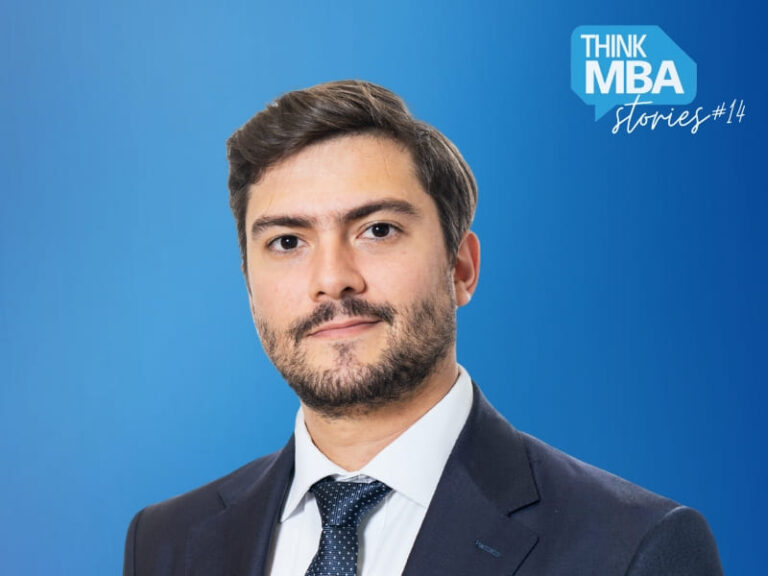
Harvard, Bain, and Beyond: Lucas Klegen on Professional Growth, Networks, and the Real Value of an MBA

Editor’s Note: In this Real Stories feature, we meet Lucas Klegen who spent two years at Harvard Business School, and it impacted the way he thinks about work, collaboration, and his career. Now back in São Paulo, he shares how he applies his MBA at Bain & Company and offers his best advice for new MBA students.
“I only had the opportunity to spend one year abroad in college in the U.S.,” he recalls. “So when the chance presented itself to do an MBA at Harvard, I took it. Having the experience of going to an elite school in the U.S. was something that really spoke to me.”
Role models also played an important part in his choice. “Several people who inspired me have gone abroad for MBAs,” he says. “In particular, a boss I had – probably the best boss I ever had – also went to HBS. So there are several people I look up to who have studied there. It’s an institution that really attracts amazing people.”
The Value of a High-Quality MBA
For Lucas, there was also a practical motivation. “There’s a kind of job security that comes with having a good MBA, especially in Brazil, where fewer people have studied abroad,” he explains. “There’s a particular kind of stamp that comes with an MBA from a place like HBS – that also really spoke to me.”
Beyond reputation, the connections have been invaluable. “Doing an MBA at HBS significantly expands your network. You meet incredible people, and everyone is super open,” he says. “I feel like I suddenly have an open door to people across the globe – both from my class and the broader HBS community. That network is really fantastic to have.”
Lucas graduated from Harvard Business School in the summer of 2025. During his MBA, he worked at Amazon as a Senior Product Manager. After graduation, he returned to São Paulo – and to Bain & Company, where he had started as an intern in 2019 and later worked as a Senior Associate Consultant.
“After finishing at HBS, I had to choose between staying in the U.S. or going back to Brazil,” he says. “I chose to return to São Paulo and to Bain. I feel that I can do a lot more here with my experience from HBS and my professional background. The market in the U.S. feels more saturated, whereas Brazil is still an emerging market. There’s a lot I still want to learn, and I can learn some of those things much faster here.”
“There’s a kind of job security that comes with having a good MBA, especially in Brazil, where fewer people have studied abroad,”
Learning from HBS
Looking back, Lucas says the program changed how he thinks, works, and communicates. “At HBS, most classes are taught through the case method,” he explains. “You study a case, prepare your analysis, and practice sharing your opinion in front of the class. Doing that for two years really prepared me to think on my feet, be objective, and communicate better.”
The diversity of topics also broadened his perspective. “We read so many cases about companies across different industries and geographies that I now feel able to have a conversation about almost any business, anywhere. It gave me a bigger worldview,” Lucas says.
Balancing It All
During his time at HBS, Lucas balanced his studies with professional experience. “I worked during the summer and throughout my whole second year – during summer at Amazon as a Product Manager, then throughout my 2nd year remotely for a Brazilian startup developing an AI model to measure default risk for SMBs,” he says.
For Lucas, time management was essential. “The days are packed,” he says. “I really learned how to manage my time and be intentional about it. At HBS, classes usually run from 9 a.m. to 3 p.m., then you work from 3 to 7, and after that, you might have time to go to the gym, go out for dinner with friends, or prepare cases for the next day. You have to be meticulous with planning your time.”
Lucas developed his own strategies to manage the workload. “You can spend an hour per case or five hours per case – it’s easy to get overwhelmed. So I’d timebox myself: one hour per case, then move on. Otherwise, you can be reading until the early morning.”
Setting boundaries was another key lesson. “My number one priority was school,” he says. “I would never miss class because of work. I was clear about how much I could do each week.”
Socially, he came to value depth over breadth. “At first, meet a lot of people – go for breadth,” he advises. “But after a while, focus on depth. Find your group of friends and build that connection.”
Lucas found a break from the cognitive workload in physical activity. “I worked out for an hour or an hour and a half every day. It helped manage the time pressures,” he says. “And sometimes I’d change my study environment – just studying and working in new spaces helped me enjoy it more.”
“It’s a long-term investment — you might not see the results right away. If you’re doing it just for a salary increase, it’ll be two miserable years.”
For anyone considering an MBA, Lucas’s advice is clear: “Be intentional – about your time, your goals, and the people you surround yourself with. It’s likely the last time you’ll study in a structured way, so enjoy it. Take it seriously, but also make the most of all the opportunities it presents.”
A lot of aspiring MBA students are wondering if an MBA is worth the investment. “It’s worth it if you’re willing to put in the work,” he says. “If you make an effort to organize conferences, go on business trips, and talk to a lot of people, the return is there. But it’s a long-term investment — you might not see the results right away. If you’re doing it just for a salary increase, it’ll be two miserable years.”
For Lucas, the true value of his MBA isn’t just in the title or the brand, but in how it reshaped the way he approaches professional challenges and people. “I matured a lot,” he says. “I feel more comfortable giving feedback, having tough conversations, and thinking strategically.”
He sees the coming years as a time to apply those lessons back home. “In ten years, I see myself either as a partner at Bain or leading teams in Brazil,” he says. “But no one knows the future, and I am happy for the network I built at HBS.”
Reflecting on the experience, Lucas has one final piece of advice for anyone considering an MBA: “Take it seriously, but also enjoy it,” he says. “It’s probably the last time you’ll be studying in a structured way, surrounded by amazing people from all over the world. Be open to the opportunities and experiences it presents and make the most of the two years.”
“It’s likely the last time you’ll study in a structured way, so enjoy it. Take it seriously, but also make the most of all the opportunities it presents.”