Contact Us
[email protected]

Q&A with Jake Berber: On Building Prefer During His MBA at NUS

Editor’s note: In this edition of ThinkMBA Real Stories, we meet Jake Berber, co-founder of Prefer, an innovative startup that uses fermentation to recreate the flavors and aromas of coffee and cocoa more sustainably and affordably. With a background in biotech, Jake pursued an MBA at NUS, where he balanced his academic journey with building Prefer. In this Q&A, Jake shares how his MBA experience at NUS played a role in launching and growing Prefer Coffee.
Jake’s story is one of bold experimentation and unconventional balance. While pursuing his MBA at NUS Business School, he wasn’t just studying entrepreneurship — he was living it. Between lectures and investor calls, Jake was building Prefer, refining his business pitch, and learning to make time itself a strategic asset.
What stands out most is Jake’s honest take on the MBA journey: that success isn’t about perfect grades or polished case studies, but about using the MBA as a testbed for real ideas. For him, the greatest ROI wasn’t financial — it was access: to Singapore’s thriving food tech ecosystem, to a co-founder, and to the chance to turn an idea into impact.
His story reminds us that in today’s world, an MBA is what you make it. It can be a pause, a pivot, or a platform — and for founders like Jake, it can be the launchpad for something entirely new.
TA: What motivated you to pursue an MBA at NUS?
Jake Berber (JB): NUS allowed me to be in Singapore, close to emerging food tech activity in Asia, and to meet people who wanted to found a company with me.
“So it wasn’t about grades anymore; it was more about using school as a testbed for things we were thinking about at Prefer.”
TA: You founded Prefer while finishing your MBA at NUS. Can you tell us a bit about Prefer and how balancing the MBA and a new start-up worked out?
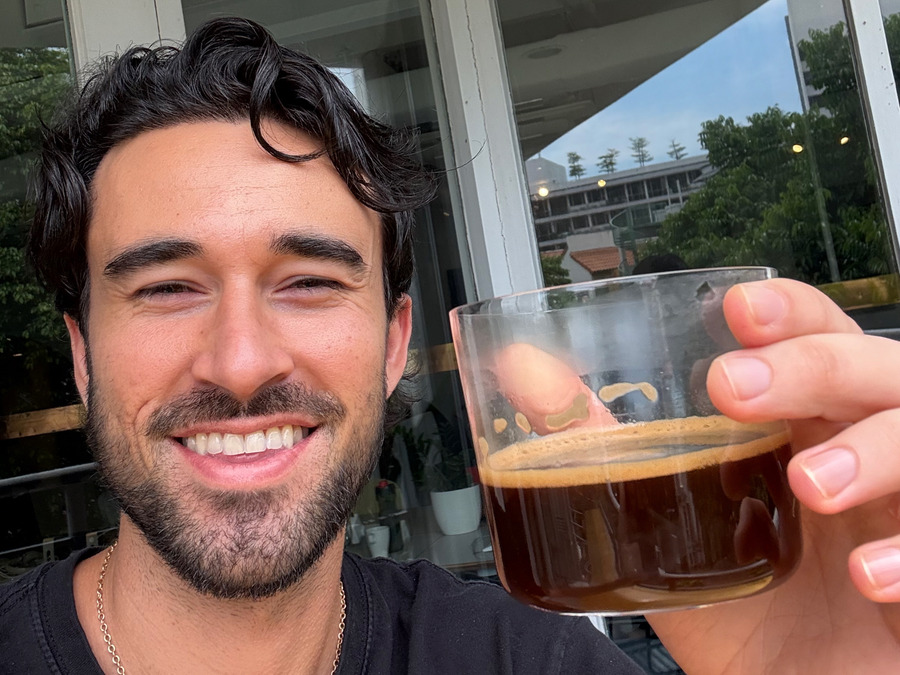
JB: Prefer makes flavours and ingredients under threat, like coffee and cocoa. We use fermentation to recreate the taste and aroma of coffee and cocoa more sustainably and affordably. I met my co-founder at Entrepreneur First while I was wrapping up my MBA. Balancing both wasn’t easy, and I often felt like class wasn’t the best use of time, but it forced my time management skills to improve.
TA: What were the biggest challenges you faced during your MBA, and which solutions helped you overcome them?
JB: Time was the biggest challenge. I was studying and building a company all at once. I learned to say no a lot and wasn’t able to fully prep for classes. So it wasn’t about grades anymore; it was more about using school as a testbed for things we were thinking about at Prefer.
TA: You mentioned using school as a “testbed” for some of the ideas at Prefer. Could you share a specific example of a project or lesson that helped you test or refine a business concept?
JB: I didn’t do this at NUS MBA, but at Tel Aviv University MBA, where I started, I started an NFT project as part of an entrepreneurship class that got real-world traction. It was a good exercise in applying class to life.
TA: Can you share a specific instance where a skill or concept from your MBA directly impacted a decision or strategy at Prefer Coffee?
JB: The entrepreneurship module with Prof Julian Pan was memorable. I remember a case study on valuation negotiation that stuck with me. When I pitched actual investors, that class made it feel like I’d been there before.
“I had to get comfortable being the odd one out. Once I stopped trying to fit the usual MBA mold, I started getting a lot more out of it.”
TA: Looking back, were there any surprising challenges you encountered during your MBA that you didn’t expect? How did you tackle them, also with the added responsibility of running a company?
JB: I didn’t expect how lonely it would feel at times, but I sort of liked being an outsider. Everyone around me was exploring consulting jobs, case studies, etc, and I was trying to get people to try bean-free coffee. I had to get comfortable being the odd one out. Once I stopped trying to fit the usual MBA mold, I started getting a lot more out of it.
TA: How long did it take to see a return on investment (financial or otherwise) from your MBA? Was it what you expected?
JB: I don’t think this question is very relevant for me because of the steep scholarship I was on, but in my case, it was pretty much immediate.
TA: What three things would you advise someone to do to make the most of their MBA experience?
- Don’t stop what you’re working on outside of school.
- When your classmate asks if you want to get that drink, do it (even if you have MBA work to do).
- Use each project as a test of a startup you’d be interested in running.
TA: What was the most valuable outcome of your MBA – career shift, network, leadership skills, or something else?
JB: NUS brought me to Singapore, which allowed me to meet my co-founder.
TA: Given your experience of balancing a startup and an MBA, do you have any tips on time management or productivity that helped you keep everything moving forward?
JB: I stopped pretending balance was possible. There were weeks where Prefer came first and school was background noise, and weeks where it flipped. The trick was being fully in whichever mode I was in.
TA: If someone close to you asked whether an MBA is still worth it today, what would you tell them based on your experience?
JB: It depends on what you want out of it. If you want a career shift or a new network, it’s still worth it. If you’re in it for learning, probably not. For me, it paid off because it allowed me to come to Singapore and start Prefer.
“If you want a career shift or a new network, it’s still worth it. If you’re in it for learning, probably not.“