
The Road to Harvard Without an MBA: Tony Tiyou’s Entrepreneurial Journey
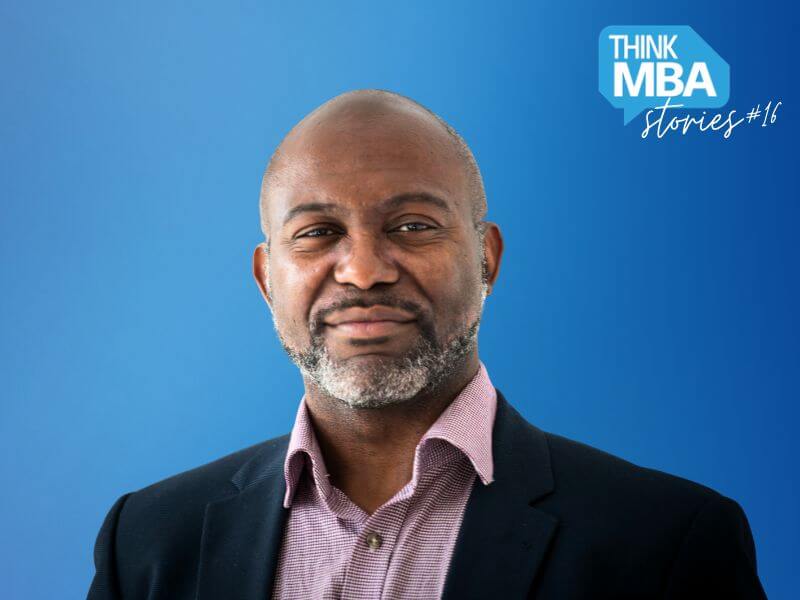
Tony Tiyou once spent two years researching the world’s top MBA programmes, Harvard included. Then a birthday gift, Josh Kaufman’s The Personal MBA, changed his mind. More than a decade later, he walked into Harvard Business School as an invited speaker. He explains why he chose self-education, and its trade-offs.
ThinkMBA(TA): You once considered pursuing an MBA to advance your career. What made you start questioning whether it was the right path for you?
Tony Tiyou: I was a young engineer with a decent position, but I had much bigger aspirations. I could see some of my peers being put on the fast track and I kept asking myself: why not me? Many of my friends had taken the MBA route to change the direction of their careers, and several of them seemed to be doing well from it. So I did what ambitious people do. I researched the best MBA programmes in the world, Harvard among them, studied their admissions processes and looked at the preparation required.
Then I spent a good couple of years being indecisive. Looking back, that indecision was the signal. When something is truly right for you, you rarely need two years to commit to it.
The turning point came when a good friend gave me a book for my birthday: The Personal MBA by Josh Kaufman. I couldn’t put it down until the last page. It forced me to ask the question I had been avoiding: what problem is an MBA actually solving for me? My real goal was not a better job title. It was to build my own business. Once I framed it that way, the answer became clear.
TA: What ultimately led you to choose self-education instead of a formal MBA?
TT: Three reasons, and they still hold today.
First, cost. Top programmes cost well over $100,000 in fees alone, before you add living costs and the salary you give up while studying. Unless you have serious savings or a sponsor, that means a large loan and years of repayments.
Second, alignment. My goal was entrepreneurship. Debt and entrepreneurship are an uncomfortable pairing. With a large loan to repay, the logical move is a well-paid role in consulting or finance, not the risk of starting a company. Debt quietly makes your career decisions for you. And for entrepreneurship, nothing replaces actually starting and running a real business. You learn business by doing business.
Third, the leadership gap. An MBA does not guarantee a high-paying job, and it cannot make you a skilled manager or leader. Decision-making, management and leadership are built through practice and consequences, and no classroom can fully reproduce that, however prestigious it is.
So instead of spending a fortune on knowledge that was only partly relevant to me, I decided to invest my time and money in learning exactly what I needed to become an entrepreneur. I like to say I don’t have an MBA, but I did go to business school, and I’m still enrolled.
“Decision-making, management and leadership are built through practice and consequences, and no classroom can fully reproduce that, however prestigious it is.”
TA: How did you decide which skills and knowledge you needed to develop on your own?
TT: I started with the destination and worked backwards. If the goal is to build a business that creates real value, then the skills you need are not mysterious: creating value, marketing it, selling it, delivering it, and managing the money. Kaufman’s book gave me that map, and I used it as my curriculum.
Then I applied one simple rule: learn what the business needs right now, not what might be useful one day. Just-in-time learning, not just-in-case learning. At each stage I asked myself: what is the bottleneck stopping us from growing today? That bottleneck became my next subject.
As an engineer, my first gap was sales and marketing. Engineers tend to believe a good product sells itself. It doesn’t. Later, building Renewables in Africa, the bottlenecks became deal structuring and financing, because African clean energy projects only move when they are bankable. Then came media and storytelling, as we built an audience of more than 15,000 professionals. Today it is AI and carbon markets.
The final rule: whatever I learn, I apply within days. Knowledge you don’t use is entertainment. I also invest in paid programmes and mentors, because when you pay, you pay attention.
TA: As you built your career and pursued entrepreneurship, what did you learn about developing business and leadership skills outside the classroom?
TT: The market is the toughest professor you will ever have, and also the fairest. It doesn’t grade on effort. It grades on results, and the tuition is paid with your own money and your own mistakes. That is exactly why the lessons stick.
Three lessons stand out. First, leadership is mostly about building systems, not being present. I lead a small international team across several countries, so I can’t manage by walking around. I had to learn to lead through clear processes, trust and accountability.
“Whatever I learn, I apply within days. Knowledge you don’t use is entertainment. I also invest in paid programmes and mentors, because when you pay, you pay attention.”
Second, resourcefulness beats resources. When I was invited to speak at the Harvard Business School Africa Business Conference, I was self-funding the trip. Rather than simply turning up, I negotiated for RiA to become the Official Energy and Climate Media Partner and added a second session, a masterclass. That kind of leverage thinking isn’t taught in a lecture. It is learnt when you have to make limited resources go further.
Third, Africa is a brilliant leadership school. Working across African markets teaches you to handle complexity, ambiguity and changing rules, and to make decisions with incomplete information. Those are exactly the skills every leader needs in today’s world.
TA: Looking back, what has been the biggest benefit of the path you chose, and what have been its limitations?
TT: The biggest benefit is freedom. I had no debt dictating my choices, so I could take the risk of building Renewables in Africa from scratch. My learning has always been tied to real problems, so it compounded quickly. And the journey came full circle in a way I could never have planned: more than a decade after considering Harvard as an applicant, I walked onto the Harvard Business School campus as an invited speaker. I sat in on a case-method class on the rise and fall of Chavism, then a few days later delivered my own masterclass to a packed room. The path to Harvard doesn’t always run through admissions.
But I’ll be honest about the limitations, because they are real.
You don’t get a ready-made network or a brand on your CV that opens doors for you. You have to earn every introduction and build credibility one result at a time, which takes longer. Some institutional rooms still value credentials, and you have to work harder to get into them.
You also miss the cohort. Sitting in that Harvard classroom, I saw what an elite programme does brilliantly: sharp people challenging each other, arguing both sides with rigour, being trained how to think rather than what to think. Learning on your own can leave blind spots if you don’t deliberately seek out people who will challenge you.
Finally, self-education needs serious discipline. Nobody sets your assignments or checks your progress. If you aren’t self-driven, this path can turn into a lot of reading and very little progress.
TA: You’ve raised concerns about the cost of an MBA and its practical value. How do you think prospective students should weigh these trade-offs?
TT: Treat it like an investment decision, because that is what it is.
Start with the full cost, not just the fee: tuition, living expenses, one or two years of lost earnings, and the interest on any loan. For a top programme, the real figure can be several times the advertised fee.
Then be very specific about what you are buying. An MBA bundles four things: knowledge, a network, a brand and a career switch. Knowledge is now cheaper and more accessible than ever. Between books, online courses and AI tools that act as personal tutors, you can learn most of the curriculum for a fraction of the price. The network, the brand and access to certain recruiters are much harder to replicate. In my view, those are the only things worth paying the premium for, and only from the very best schools.
Next, ask how the debt will shape your choices afterwards. If repayments would push you into a job you don’t want, that is a hidden cost.
Finally, apply a simple test: can you name the specific role or outcome that only an MBA will unlock for you? If you can, and the numbers work, go for it. If you can’t, keep your money and invest it in yourself in a more targeted way.
TA: Having considered both formal education and self-directed learning, when do you think an MBA is worth pursuing, and when might another path be more suitable?
TT: To be clear, I am not against MBAs. I am against doing one without a clear reason.
An MBA is worth it when the credential is the gatekeeper for where you want to go, for example moving into management consulting, investment banking or senior corporate leadership, where top-school MBAs are a common recruiting channel. It makes sense when your employer is sponsoring you, which changes the economics completely. It is worth it when you can get into a world-class programme whose network will open doors across countries and industries. And it can be powerful for career changers who need a structured reset.
Another path is more suitable when your goal is to build your own business, when you would have to take on heavy debt to pay for it, or when you already have traction in a market and the real lessons are waiting in your own company.
There is also a middle way: short executive programmes, focused certificates, mentoring and peer groups. You can build a very effective personal business school without committing two years and six figures.
TA: What advice would you give someone who is unsure whether an MBA is the right next step for their career?
TT: Five things.
Get clear on your destination. Write down where you want to be in ten years, then ask whether the MBA is the only road, or simply the most familiar one.
Talk to real people. Speak to five people who did an MBA and five who chose not to. Ask them what it actually changed in their lives, not what the brochure promised.
Read The Personal MBA before you spend $100,000. It costs the price of a lunch and a weekend of your time. If it leaves you hungry for the structure, rigour and network of a programme, that is a strong signal. If it gives you the confidence to start, that is also a signal.
Test before you commit. Take one short course, start a small project or side business, and see how you learn best and what you really enjoy.
Decide, and don’t drift. I lost two years to indecision. Either path can work, but only if you commit to it fully. The worst option is staying in the middle, neither enrolled nor building.
TA: If you could go back to the start of your career, is there anything you would have learned sooner or done differently?
TT: Yes, several things.
I would have learned to sell much earlier. Every career, technical or not, depends on your ability to sell an idea, a product or yourself. As an engineer, I discovered that later than I should have.
I would have built my personal brand and shared my work publicly sooner. Visibility compounds. The content I publish today opens doors that cold emails never could.
“Nobody sets your assignments or checks your progress. If you aren’t self-driven, this path can turn into a lot of reading and very little progress.”
I would have focused on systems and recurring revenue from day one, instead of chasing one-off wins. Sustainable businesses are built on repeatable systems, not heroic effort.
I would have deliberately built my own cohort earlier: mentors, peers and mastermind groups to challenge my thinking. That is the one part of an MBA I believe every self-learner needs to recreate.
And I would have made decisions faster. Speed of decision is a competitive advantage.
One more thing: I would have backed the African angle earlier and with more conviction. What some saw as a niche has become my greatest strategic advantage. The world is finally paying attention to Africa’s clean energy potential, and being the bridge between Africa and global markets is a position worth owning.
If I could tell my younger self one thing, it would be this: you don’t need permission or a particular credential to build something meaningful. Keep learning, keep building, and the rooms will come.
Planning to build something of your own? [See whether an MBA would speed it up →]