

The Real ROI of an SDA Bocconi MBA: Majd Roufail on transitioning from Architecture to Tech, & AI Strategy

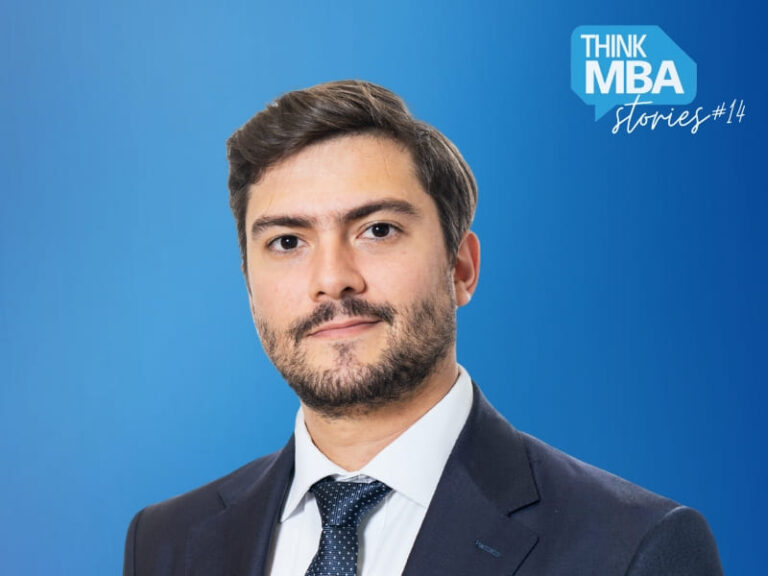
Editor’s Note: In this edition of ThinkMBA Real Stories, we sit down with Majd Roufail, an SDA Bocconi MBA graduate whose career connects architecture and complex project management with commercial strategy, digital transformation, and international go-to-market execution. After more than four years in Dubai managing high-end fit-out projects, leading cross-functional teams, and using technology to improve operations, Majd pursued an MBA to sharpen his strategic toolkit and expand his career options.
Through the MBA experience, he discovered a strong interest in the tech and innovation space, and began moving closer to product, strategy, and emerging technologies such as artificial intelligence. Today at nCore HR, Majd works with the commercial team and supports strategic project implementations that address customer pain points through structured delivery plans and measurable improvements. In this candid conversation, he shares why he chose Bocconi, what the real returns of an MBA look like in practice, and how hands-on consulting experience and global exposure are shaping the future he’s building.
Majd is a Strategy Consultant at nCore HR working with the commercial team, leading product implementation projects focused on AI. His role is strategic support, competitor analysis, and product implementation plans that translate customer needs into measurable outcomes.
With a strong interest in entrepreneurship, Majd has supported marketing and sales strategy across tech, construction, and sustainability, helping companies grow and support them to expand into the MENA region (specifically Dubai) where he combines on-the-ground market experience with an international business strategy perspective.
He recently completed an MBA at SDA Bocconi, where he was in the top 50% of the class, during which he led three consulting projects focused on business growth, digital transformation, and go-to-market strategy. Before that, he spent over four years in Dubai managing high-end interior fit-out projects, leading cross-functional teams, and integrating ERP and CAD tools to drive operational efficiency.
What brought you to choose an MBA at SDA Bocconi? What were your considerations and goals?
Majd chose to pursue an MBA in Europe for the strong reputation and academic quality of its schools, the better value for money, and his desire to experience life in Europe first hand. “I was very intentional about choosing a place where I could truly live in the city, not just study in it,” he says.
“Unlike campuses that are on the outskirts of a city, Bocconi allows you to fully experience urban life culturally, socially, and professionally alongside your studies.”
Initially, he considered applying to several schools in Paris and Barcelona. “I was lucky enough to visit SDA Bocconi before making my final decision, and that made a huge difference. What really stood out to me about SDA Bocconi was its location right in the middle of Milan,” he emphasizes. Unlike campuses that are on the outskirts of a city, Bocconi allows you to fully experience urban life culturally, socially, and professionally alongside your studies.
His long-term goal is to become an entrepreneur, and Majd wanted an MBA that would give him a strong foundation in business management and leadership. “Bocconi really resonated with me, especially its new campus, an award-winning LEED Platinum building, designed by a world-famous Japanese architect. It may sound like a small detail, but the environment you study in matters,” he says.
Beyond academics and facilities, he also felt a strong connection with the people. “The SDA Bocconi team was extremely welcoming from the beginning, and I found Italian culture to be a great personality fit for me.” That’s something Majd strongly advise future MBA candidates to think about: “the country and culture you choose will shape your experience, and in many ways, change you. An MBA is not just an academic journey, it’s a life experience,” he reflects.
What was the most valuable outcome of your MBA at SDA Bocconi?
He thinks that the most valuable outcome of his MBA at SDA Bocconi was successfully transitioning into the tech space. Through the program, Majd discovered that he genuinely enjoys working with digital products and software, especially when it comes to creating and improving digital experiences.
“Through SDA Bocconi, I managed to find a company (nCore HR) that truly fits my working style, values, and appreciation for innovation, which has been incredibly important for my professional satisfaction. The MBA helped me realize that this is the right direction for my career, and it gave me clarity and confidence about where I want to go next,” he says.
In addition to the professional shift, Majd admits that the experience at SDA Bocconi significantly strengthened his networking skills. “We were constantly exposed to events, guest speakers, and industry professionals, which pushed me out of my comfort zone. I was also part of the board of the Entrepreneurship Club, which allowed me to build a strong network within Milan’s entrepreneurial ecosystem,” he recalls.
“Overall, the MBA made me more confident in pursuing what I genuinely enjoy — It also provided a level of credibility that helps when opening doors, starting conversations, and taking the next steps toward ambitious goals,” he says.
How long did it take to see ROI? From a financial perspective, was it worth it?
Majd doesn’t think that an MBA can be rewarding from a purely financial perspective, but the return on investment really depends on the career path you choose.
“If you pursue consulting or finance, it’s possible to earn a strong salary relatively quickly after graduation. In many other cases, however, it can take a few years before you start seeing the higher salaries often advertised on MBA program websites,” he reflects.
“The MBA is a time for exploration and self-discovery, and allowing yourself that space often leads you to a career path that feels more natural and fulfilling in the long run.“
When it comes to whether it was worth it for him, he believes the answer is very personal and depends heavily on each situation. If pursuing an MBA means taking on a large amount of debt and putting yourself under constant financial pressure, it may not be the right decision. “Not everyone secures a job immediately after graduation, and you may need a few months to find the right opportunity, which can be stressful if finances are tight,” Majd notes.
“On the other hand, if you feel reasonably comfortable funding your MBA, even if that includes taking on a manageable loan, I truly think it’s worth it,” he says. “Beyond the financial aspect, you build meaningful friendships, expand your worldview, and create memories that stay with you long after the program ends. Those intangible returns are harder to measure, but for me, they were just as valuable as the professional outcomes,” he says.
What three pieces of advice would you give to potential students considering doing an MBA?
Majd shares three recommendations for new MBA students:
- Apply early and actively explore scholarship opportunities. Many schools are offering more scholarships than people realize, and applying early can significantly improve your chances. It is also worth asking schools whether they offer a GMAT alternative, as this can sometimes be an easier option and save you a lot of time and stress during the application process.
- Start thinking early about your post-MBA career path and whether you plan to stay in the country where you studied. If you do plan to stay, he strongly recommends learning the local language as early as possible. This can make a huge difference when it comes to networking, integrating into the job market, and finding opportunities after graduation.
- Try not to stress too much about finding a job during the MBA itself. Instead, focus on attending events, joining clubs, and pursuing activities you genuinely enjoy. The MBA is a time for exploration and self-discovery, and allowing yourself that space often leads you to a career path that feels more natural and fulfilling in the long run.
How do you find the alumni network helpful for your work and career?
Majd found the school’s Career Centre to be extremely supportive and approachable. “They played a key role in connecting me with my current employer through a business project, which ultimately led to a job opportunity.”
Because of that, he strongly recommends taking business projects seriously and choosing companies that students would genuinely be interested in working for. “They can be a great way to build relationships and get your foot in the door,” he adds.
More broadly, he believes SDA Bocconi has one of the strongest alumni networks in Italy. As many Italian professionals have moved abroad, particularly to places like Dubai, he has also found the alumni network there to be very active and supportive. “This makes the network valuable not only locally, but also internationally,” he notes.
“Overall, the strength of the alumni network is something that continues to benefit you both in the short and long term, and it should definitely be a key factor to consider when evaluating any MBA program,” Majd says.
Can you present an example of your MBA program at SDA Bocconi working effectively in your current position?
Majd explains that one example of how my MBA at SDA Bocconi directly applies to his current role comes from the business simulation game he worked on during the program:
“We were divided into groups, and each team managed a simulated company through an online software platform. It was essentially a competition between groups, where we had to make real business decisions around pricing, marketing budgets, and overall strategy, and then see how those choices affected performance and market results,” he says.
“One of the key assets MBA students develop is the ability to work effectively with people from very diverse backgrounds.”
In the end, there was a clear winning team, and what set them apart was their pricing strategy. They were more aggressive in how they priced their product, offered the best value to customers, and as a result managed to capture the largest market share by the end of the simulation — “that experience showed me that in many business contexts, especially in competitive markets, pricing can be a powerful strategic lever,” he recalls.
“I see this lesson reflected in my work today. When thinking about product positioning, pricing, or go-to-market strategies, I often go back to that experience and remind myself that being bold, competitive, and customer focused on value can make a real difference in achieving strong results,” he says.
You have led three consulting projects at Bocconi, focused on business growth, digital transformation, and go-to-market strategy. What do you gain from these experiences?
Majd says that he gained a lot from hands-on consulting and business projects, especially those focused on growth, digital transformation, and go-to-market strategy. “One of the most influential experiences was my business project with nCore HR, where I worked on strategy and market expansion topics. That project was particularly valuable because it later evolved into a longer-term collaboration, and I continued working with the company as a strategy consultant,” he says.
“In addition to that, I had the opportunity to design and lead my own business project this year, working with a team of MBA students on a go-to-market strategy for nCore HR. “Leading this project allowed me to apply everything I had learned during the MBA, from structuring a strategy to coordinating a team and translating ideas into practical recommendations,” he notes.
He also completed a short internship with CCT, an Italian startup operating in the carbon credit market using blockchain technology to provide high-quality carbon credits generated with a social project. “This experience exposed me to impact-driven business models and reinforced my interest in working at the intersection of technology, sustainability, and innovation,” Majd explains.
What challenges did you experience during your MBA, and how did you overcome them?
One of the main challenges Majd experienced during the MBA was time management. Many things are happening at the same time, from classes and group work to events, networking opportunities, aperitivos (a very important thing in Italy), and dinners.
“On top of that, you also need to find time to apply for jobs. It can feel quite hectic, especially at the beginning. What helped me was becoming more intentional about planning my time and building better time management habits early on,” he adds.
Another challenge for him was learning the local language. The MBA class is very international, with most students speaking English daily, which makes it harder to practice the local language consistently. While this creates a very comfortable environment, it can slow down language learning. “Looking back, I would strongly recommend dedicating as much time as possible to learning the local language early on, as it can make a big difference both professionally and personally after the MBA,” he says.
What assets do students with an MBA degree have over other non-MBA students?
In Majd’s opinion, one of the key assets MBA students develop is the ability to work effectively with people from very diverse backgrounds. “During the program, you are constantly placed in group work with classmates who may come from engineering, consulting, marketing, finance, or completely different industries and cultures. This often leads to very different perspectives and ways of thinking, which can be challenging at first,” he explains.
Over time, this experience pushes you out of your comfort zone and teaches you how to listen, adapt, and collaborate more effectively. “You learn how to align different viewpoints toward a common goal, which is a crucial skill in real business environments. I believe this ability to work with diverse teams on complex problems is one of the strongest advantages MBA graduates have over non-MBA candidates in their careers,” he says.
How does the MBA help you to prepare for AI and its impact in the field of international business development?
When it comes to AI and its impact on international business development, Majd believes his MBA cohort was very fortunate. “We were among the first classes where AI was consistently integrated into business cases and discussions across multiple courses. This meant we were not looking at AI from just one angle, but exploring its implications across strategy, operations, marketing, and leadership, which was extremely valuable,” he explains.
“The MBA helped me develop a way of thinking about AI not just as a technical tool, but as a fundamental shift in how businesses operate and compete globally,” he admits. “More broadly, I see MBA programs today becoming increasingly adaptive, focusing less on technical skills and more on leadership, decision making, and strategic thinking in an AI-driven environment.”
“The MBA helped me develop a way of thinking about AI not just as a technical tool, but as a fundamental shift in how businesses operate and compete globally.”
Majd’s advice to prospective students is to pay close attention to how seriously an MBA program takes AI. “It is not a passing trend but a powerful transformation, and choosing a program that actively integrates AI into its curriculum can make a meaningful difference for your future career,” he emphasizes.
Majd recently completed his MBA at SDA Bocconi, where he led three consulting projects focused on business growth, digital transformation, and go-to-market strategy. Prior to the MBA, he spent over four years in Dubai managing high-end fit-out projects for luxury clients, leading cross-functional teams, and improving operational efficiency through the adoption of industry specialized technology tools.