
Executive Edge: Energize–Redesign–Gel—The Rhythm of Positive Organizational Change
| Executive Edge: The New MBA Playbook in Practice Translating strategy into real-world results |
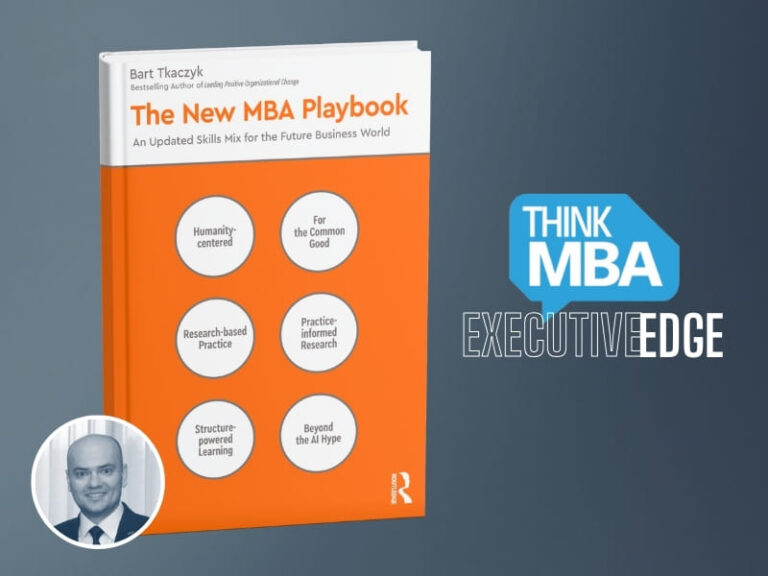
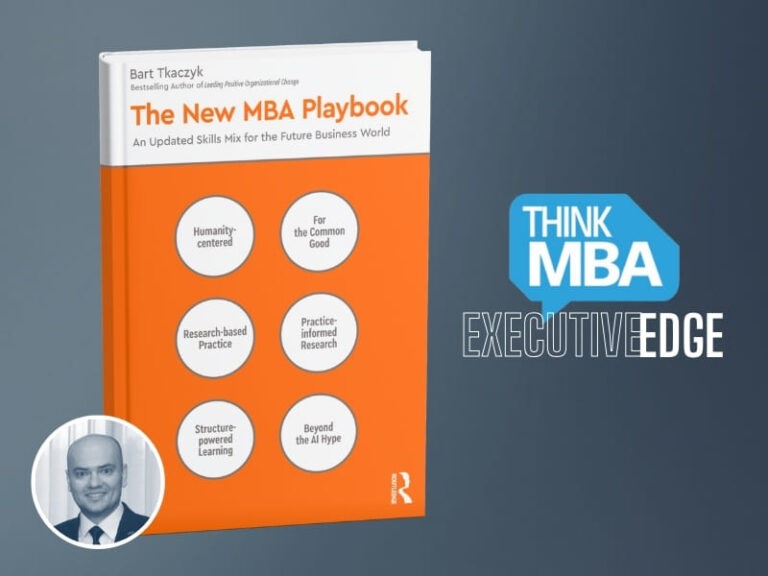
| Executive Edge is a series authored by Dr. Bart Tkaczyk. Inspired by his latest book The New MBA Playbook: An Updated Skills Mix for the Future Business World (London & New York: Routledge), Executive Edge reveals the human and organizational dynamics that make or break strategy. Each column distills the latest management research into practical, next-day leadership moves. |

“The best of Organization Development (OD) is the jazz ensemble. It’s multiple sets of skills—harmonizing.” — David W. Jamieson
Last time, I noted that strategy does not spread through presentations. Rather, it spreads through conversations.
But once people understand the strategy, believe in it, and begin to own it, another executive challenge immediately appears:
Can the organization actually change fast enough to make that strategy real?
Most organizations are not short of change. They are drowning in it.
A new operating model. Another digital transformation. A restructuring. Delayering. A round of downsizing. A merger. A new AI initiative. New customer expectations. New regulation. New competitors. Another cost program. Another culture initiative.
Employees barely absorb one transformation before another arrives. And eventually something predictable happens:
Change fatigue.
People stop getting excited about the next transformation announcement because they have heard it before. Leaders present another beautifully designed roadmap. Town halls are scheduled. Workstreams are launched. New vocabulary appears.
Then, slowly, the gravitational pull of the old organization takes over. People return to familiar routines. The organization snaps back.
The problem is not necessarily that people “resist change.” The deeper problem may be that we are still treating change as something organizations occasionally manage, rather than a capability organizations continuously develop.
Stop Managing Change. Build the Capacity to Change.
Traditional thinking tends to frame change as an event. Something happens. Management responds. A transformation program begins. The organization moves from point A toward point B. Then the project ends.
But contemporary organizations rarely enjoy such neat beginnings and endings. Change overlaps with more change. The destination moves while the organization is traveling toward it. New information appears. Competitors react. Technologies evolve. Customers change their minds.
Change is no longer an interruption to normal business. Change is normal business. Today, all leadership is change leadership—and change leadership is simply leadership.
Organization Development (OD) seems paradoxical: “Organization” suggests structure, predictability, and stability, while “Development” implies movement, change—and even disruption.
That means the executive challenge is bigger than managing individual transformations. The imperative is to create a change-able enterprise: one capable of continuously learning, imagining (and reimagining), experimenting, reconfiguring, and renewing itself.
Refuse to allow yesterday’s problems to monopolize tomorrow’s imagination.
That is the thinking behind Energize–Redesign–Gel, or ERG—an approach I developed for leading positive organizational change (Tkaczyk, 2021). This idea of organizational renewal as a strategic capability also extends into my next book project, currently in development, on strategic human resource development (HRD).
At the core of ERG are three mutually reinforcing organizational capabilities:
- Energize through positive personal, relational, and organizational energy.
- Redesign through collective design thinking and co-creation.
- Gel through strategic super-flexibility—learning, unlearning, reconfiguring, renewing, and making the new organization work as a coherent system.
They sound sequential.
They are not.
Like an ensemble, their strength lies in their interplay. ERG is better understood as a continuous organizational rhythm. Energizing shapes redesigning. Redesigning creates new energy. Gelling exposes assumptions that may require more redesign. New disruptions may force the organization to energize again.
The organization keeps moving.
To move from principle to practice—and access the full ERG toolkit, with 30 practical tools for imagining, diagnosing, implementing, and sustaining change—see my Routledge book, Leading Positive Organizational Change: Energize–Redesign–Gel. For a quick introduction to ERG—in under four minutes—watch the microlearning video. And if you prefer learning through reflection and self-insight, explore the free Individualized Learning Record (ILR), based on the book.
ENERGIZE: Change the Energy Before You Change the Organization
Executives usually begin transformation with analysis.
What is wrong or broken? Where are the gaps? Where are costs too high? Why are we behind?
Those questions matter. But there is a danger. Spend enough time diagnosing deficits and eventually the transformation itself begins to feel like a deficit.
People may hear:
Too much is wrong. What worked before will not take us forward. Someone else has already decided what comes next.
That is not exactly rocket fuel for transformation. Positive change begins somewhere different.
What is already strong here?
What gives this organization life? Where does exceptional performance already occur? Who energizes others? What are people proud of? What possibilities are emerging? What could this organization become at its very best?
Energizing does not mean pretending problems do not exist.
This is non-naïve positivity.
You still confront threats, vulnerabilities, poor performance, dysfunctional routines, and difficult realities. But you refuse to allow yesterday’s problems to monopolize tomorrow’s imagination.
Positive organizational energy becomes fuel.
That energy can come from higher purpose, high-quality connections, active participation, playing to strengths, shared aspiration, meaningful accomplishment, continuous learning—and the feeling that the future is something worth helping to create.
Your first executive task in transformation, therefore, may not be to issue instructions. It may be to create movement.
Start conversations. Tell the story. Connect the change to something meaningful. Surface the organization’s positive core. Build a compelling aspiration. Ask people what future they would actually want to help build. The paradox is simple: change is energizing when done by us—and disturbing when done to us.
REDESIGN: Don’t Roll Out the Future. Co-Create It.
Once energy starts moving, resist the temptation to immediately convert it into another centrally designed transformation plan.
Invite people into the design. This is where collective design thinking enters the ERG framework—mobilizing the power of people to drive strategic change. Organizations contain extraordinary intelligence that executive teams routinely underuse.
Frontline employees know where processes stall or create friction. Customers know where the experience breaks down. Middle managers know where elegant strategy collides with organizational reality. Suppliers see vulnerabilities that internal teams may miss. New employees notice absurdities that veterans have stopped noticing.
The challenge is to bring that intelligence together—to let different perspectives work in concert.
Redesign thus changes the role of leadership. Executives do not disappear. Nor do they abdicate responsibility. But instead of behaving as though leadership already possesses the answer, they create a disciplined process through which better answers can emerge.
Ask. Listen. Observe. Empathize. Imagine. Co-create. Prototype. Test. Learn.
Then redesign again.
Collective design thinking in ERG is explicitly co-creative: it involves collaborative and generative conversations, social learning, experimentation, rapid ideation, prototyping, testing, and validation.
In organization development (OD) terms, this is where ERG also resonates with dialogic OD and generative change: change emerges through conversations that open new possibilities and move people to act.
This is not participation theater. It is better strategy execution.
Because co-creation generates something no communication campaign can manufacture after the fact:
ownership.
And sometimes the smartest thing a change leader can do is surprisingly simple:
Stop trying to convince people. Start designing with them.
GEL: Make the New Organization Work—Without Freezing It
Here is where many change efforts quietly lose momentum.
Something new gets designed. The pilot works. Leadership celebrates. The transformation team moves on. Then old routines return. Old incentives reward old behavior. Old metrics pull people backward. Old assumptions reappear.
The organization has changed—but it has not gelled. Organizations need stability—as well as change. Gelling means helping the new state achieve symphonic coherence—different parts working together while remaining flexible enough to evolve. It also means running today’s business while simultaneously creating tomorrow’s. That capacity becomes especially important when navigating disruption, complexity, or competing strategic priorities.
That requires more than simply “embedding the change.” It means aligning strategy, structures, processes, measures, rewards, resources, capabilities, relationships, and behavior so that they reinforce rather than contradict one another—and celebrating progress along the way.
It also requires learning. And something executives discuss far less often:
unlearning.
Organizations become successful by learning what works. Ironically, that success can become dangerous. Yesterday’s winning routines harden into today’s assumptions. Assumptions become habits. Habits become orthodoxy. Orthodoxy becomes invisible. Soon, people are defending a logic developed for a world that no longer exists…
That is why organizational unlearning is different from organizational forgetting. Forgetting is accidental loss. Unlearning is deliberate and strategic. It means identifying knowledge, routines, assumptions, or dominant logics that have become dysfunctional—and intentionally letting them go.
As the late C. K. Prahalad would often remind us: “During a corporate transformation, the forgetting curve is sometimes more important than the learning curve.”
The executive question therefore becomes uncomfortable:
What are we exceptionally good at doing that we may now need to stop doing?
Sometimes transformation requires learning something new. Sometimes it requires giving something up. Usually, it requires both.
Positive Change Is Not Painless Change
There is another important nuance.
Positive organizational change is sometimes misunderstood as meaning that change should be pleasant.
It isn’t.
Real transformation can be difficult. Jobs may change. Structures may disappear. Capabilities may become obsolete. Power can shift. People can lose familiar identities, routines, relationships, and status. Leaders should not sugarcoat those realities.
But neither should they automatically label every difficult employee reaction as resistance. People respond to organizational change cognitively, behaviorally, emotionally, and physically. A restructuring, merger, relocation, or major technological shift may change the “psychological contract” employees believed they had with the organization.
That distinction matters. If you call every objection resistance, you may silence precisely the people who can tell you why the transformation will fail. Some resistance is obstruction. Some is fear. Some is self-interest. But some is intelligence.
So listen before you label.
Change Leadership Is a Continuous Strategic Capability
Perhaps the most important thing about Energize–Redesign–Gel is what it is not.
It is not: Energize Monday. Redesign Tuesday. Gel Wednesday. Transformation complete Friday.
ERG is dynamic. Continuous. Recursive. The organization energizes, redesigns, experiments, gels, learns, unlearns, reconfigures—and energizes again.
That is how change readiness becomes something deeper than another transformation program. It becomes part of the organization’s strategic capability. That may be one of the defining executive capabilities of our time.
Not predicting every disruption. You can’t.
Not creating the perfect transformation roadmap. You won’t.
But building an organization capable of responding intelligently and confidently when the roadmap stops matching reality.
Executive Edge Takeaways
For executives, the practical message is straightforward:
- Build change readiness and change confidence, not merely change programs. The goal is an organization capable of renewing itself continuously.
- Energy comes before execution. Transformation requires meaning, participation, relationships, strengths, and a future people want to help create.
- Co-create rather than merely communicate. Do not design the future behind closed doors and then try to “sell” it.
- Prototype before you institutionalize. Experiment, test, learn, and adjust.
- Treat some resistance as information. Listen before assuming opposition is dysfunctional. Some resistance can actually be constructive.
- Learn—and deliberately unlearn. Yesterday’s strengths can become tomorrow’s rigidities.
- Gel without freezing. Build coherence while preserving the super-flexibility to change again.
- Make ERG a rhythm, not a project. Energize. Redesign. Gel. Repeat.
A Moment for Reflection
During an executive development program I was invited to lead in the Middle East, one of the prominent sheikhs participating in the program came up to me after a session and asked whether I wanted to know which sentence from my book he had found himself returning to.
Of course I did.
He pointed to one line:
Change starts with changing everyday conversations (Tkaczyk, 2021, p. 33).
That exchange has stayed with me ever since.
What do you think? Can we really change an organization—or the world around us—without first changing the way we speak, listen, and relate to one another? Organizational change need not begin with cataclysmic shocks or seismic disruption. Perhaps every transformation begins with self-change and micro-transforming: the small, everyday shifts that make larger change possible.
Support Material
To go deeper and accelerate impact—for you and your team—explore these executive resources:
- The Full Playbook – Complete access to all 14 units of The New MBA Playbook: An Updated Skills Mix for the Future Business World. Get access here: www.routledge.com/The-New-MBA-Playbook-An-Updated-Skills-Mix-for-the-Future-Business-World/Tkaczyk/p/book/9781032805559
- Strategic Briefing Video – A concise, executive-friendly micro-learning on why today’s leaders need an updated skillset—and how to apply it immediately. Watch the video: https://youtu.be/Xrq34Jj2NMQ?si=5h2ePCoy465uCcSl
- The Visual Toolkit (Sized for A1 printing) – A poster-sized framework for workplaces and team spaces to spark dialogue around future-ready leadership. Download the poster: https://s3-eu-west-1.amazonaws.com/s3-euw1-ap-pe-ws4-cws-documents.ri-prod/9781003508274/The%20New%20MBA%20Playbook_Poster_Sized%20for%20A1%20Printing.pdf
Executive Edge equips you with practical tools to lead smarter—not harder. In the next column, I’ll explore Design Innovation, building on the ideas in The New MBA Playbook (Routledge) to help you navigate the future of business.
This is the fifth installment in the Executive Edge series. (Read installment 1, installment 2, installment 3, installment 4.)
About the Author
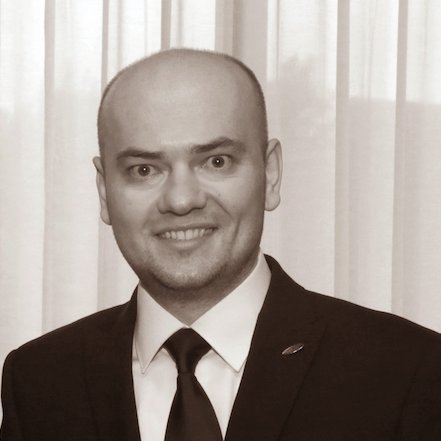
Bart Tkaczyk, Fulbright Scholar (University of California, Berkeley—the #1 public university in the U.S.), Course Leader (mbasprint.com), and Executive Member of the Academy of Management (AOM), is Managing Member of ENERGIZERS, LLC, a U.S. strategic transformation consulting firm, and currently serves on the Advisory Board of GENEXRA LLC, a U.S. future-systems venture spanning space governance, policy, diplomacy, AI, cybersecurity, quantum technologies, strategic foresight, enterprise renewal, executive crisis communication, design innovation, advanced service design, and human advancement. He partners with bold global leaders on strategy, executive leadership development, and large-scale change across sectors, blending academic rigor with practical insight. An award-winning HRD and organizational renewal advisor, behavioral economist and strategist, executive coach, MBA educator and case method instructor, and keynote speaker, he delivers impact where it matters most—boardrooms, executive classrooms, and transformation zones. His acclaimed Routledge books include Leading Positive Organizational Change: Energize – Redesign – Gel and The New MBA Playbook: An Updated Skills Mix for the Future Business World. He is now working on his third book, on Human Resource Development. On X: @DrBTkaczykMBA