


London Business School Tops Financial Times Executive Education Open Rankings 2026
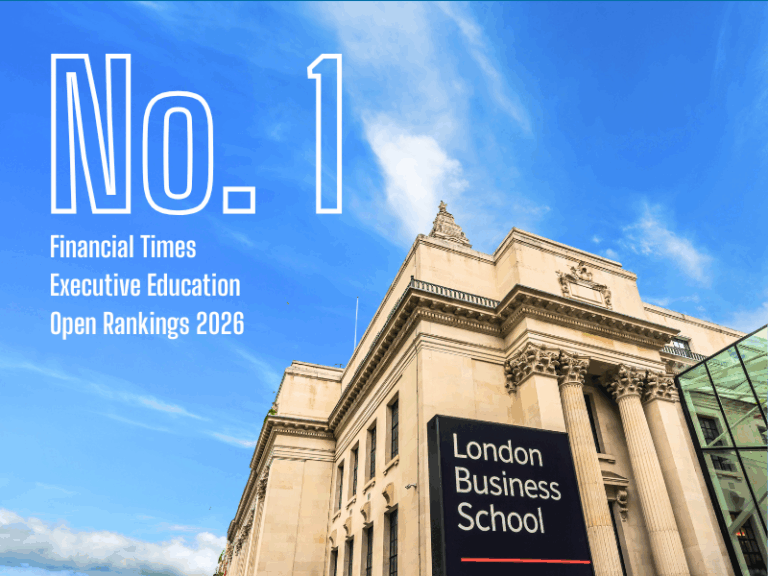
Global demand for executive education continues to surge as companies worldwide invest heavily in leadership development, digital transformation, artificial intelligence, and strategic innovation. Reflecting these trends, the Financial Times released its highly anticipated Executive Education Open Rankings 2026, highlighting the world’s top institutions delivering non-degree executive learning programs for professionals and senior corporate leaders.
European institutions once again dominated the list, reinforcing the region’s longstanding leadership in executive business education.
The rankings, published May 2026, evaluated 90 business schools worldwide based on several indicators including course design, teaching methods and materials, faculty quality, international reach, participant diversity, and client satisfaction. European institutions once again dominated the list, reinforcing the region’s longstanding leadership in executive business education. According to FT, executive education has become one of the fastest-growing sectors in higher education as organizations seek to equip managers with skills necessary to navigate technological disruption, geopolitical uncertainty, sustainability challenges, and changing workplace dynamics.
London Business School Claims the Global Top Spot
London Business School (LBS) secured the No. 1 position in the 2026 rankings, maintaining its reputation as one of the world’s leading centers for executive leadership development. The school ranked first across several core categories including course design, teaching methods, and quality of participants. LBS has consistently emphasized experiential learning, global business strategy, and leadership transformation in its executive education programs.
In an official statement published on the school’s website, London Business School noted that the recognition reflects its commitment to “transforming ambitious executives into impactful global leaders.”
The institution has expanded its executive education offerings in areas such as artificial intelligence strategy, sustainable finance, digital transformation, and global leadership. The school also operates across international locations including London and Dubai, further strengthening its global presence.
European Institutions Continue to Dominate
Ranked second globally, HEC Paris reinforced France’s status as one of the strongest hubs for executive education in Europe. They offer specialized courses in leadership, entrepreneurship, luxury management, digital transformation, sustainability, and finance. The institution has also expanded partnerships with multinational corporations across Europe, Asia, and the Middle East.
Spain’s IESE Business School ranked third globally again, strengthening its position among the world’s elite executive education providers. IESE operates campuses in Barcelona, Madrid, Munich, New York, and São Paulo, giving it a highly international footprint. The school highlighted particip nt satisfaction and international diversity as key strengths behind its strong performance, reflecting a growing global recognition of Spanish business education institutions.
Brazil’s Fundação Dom Cabral (FDC) ranked fourth globally, making it the highest-ranked institution from Latin America while Barcelona-based Esade Business School secures the fifth spot. Both schools emphasis on regional economic realities and leadership adaptability has attracted executives from across South America and Spain and beyond.
EDHEC Business School ranked sixth globally, continuing its international expansion across Europe and Asia. The French institution operates campuses and executive education initiatives in France, the United Kingdom, and Singapore. EDHEC has become particularly well known for programs in finance, business analytics, AI-driven management, and innovation leadership.
This year’s rankings also featured a tie for seventh place between Saïd Business School at the University of Oxford and Switzerland-based IMD. Oxford Saïd continues leveraging the prestige and global influence of the University of Oxford to attract senior executives from around the world. The school is particularly recognized for programs related to responsible leadership, sustainability, geopolitics, and public-private collaboration. Meanwhile, IMD maintained its reputation as one of the world’s leading executive leadership institutions. Based in Lausanne, Switzerland, IMD specializes in leadership coaching, executive transformation, and real-world management development.
INSEAD and ESMT Berlin Complete the Top 10
INSEAD, often referred to as “The Business School for the World,” operates campuses in France, Singapore, Abu Dhabi, and San Francisco. The institution is globally recognized for its multicultural learning environment and international executive programs. While ESMT Berlin has steadily emerged as one of Germany’s strongest business education institutions. Founded by leading global companies, ESMT emphasizes technology leadership, entrepreneurship, sustainability, and innovation management.
Executive Education Faces a Transformative Era
The 2026 Financial Times rankings underscore the growing importance of executive education in an increasingly complex global economy.
Business schools are rapidly redesigning programs to address major shifts in artificial intelligence, automation, sustainability, cybersecurity, and geopolitical instability. Many institutions are also incorporating flexible online and hybrid learning formats to meet the needs of working executives. The rankings also reveal the continued dominance of European institutions in executive education, with schools from the United Kingdom, France, Spain, Switzerland, and Germany occupying most top positions.
As organizations worldwide seek leaders capable of navigating rapid transformation, the role of executive education is expected to grow even further in the coming years.